Premium content

Audio presentation
Evolution of Mining and Infrastructure at Sunrise, Wyoming
(2005 National Register of Historic Places)
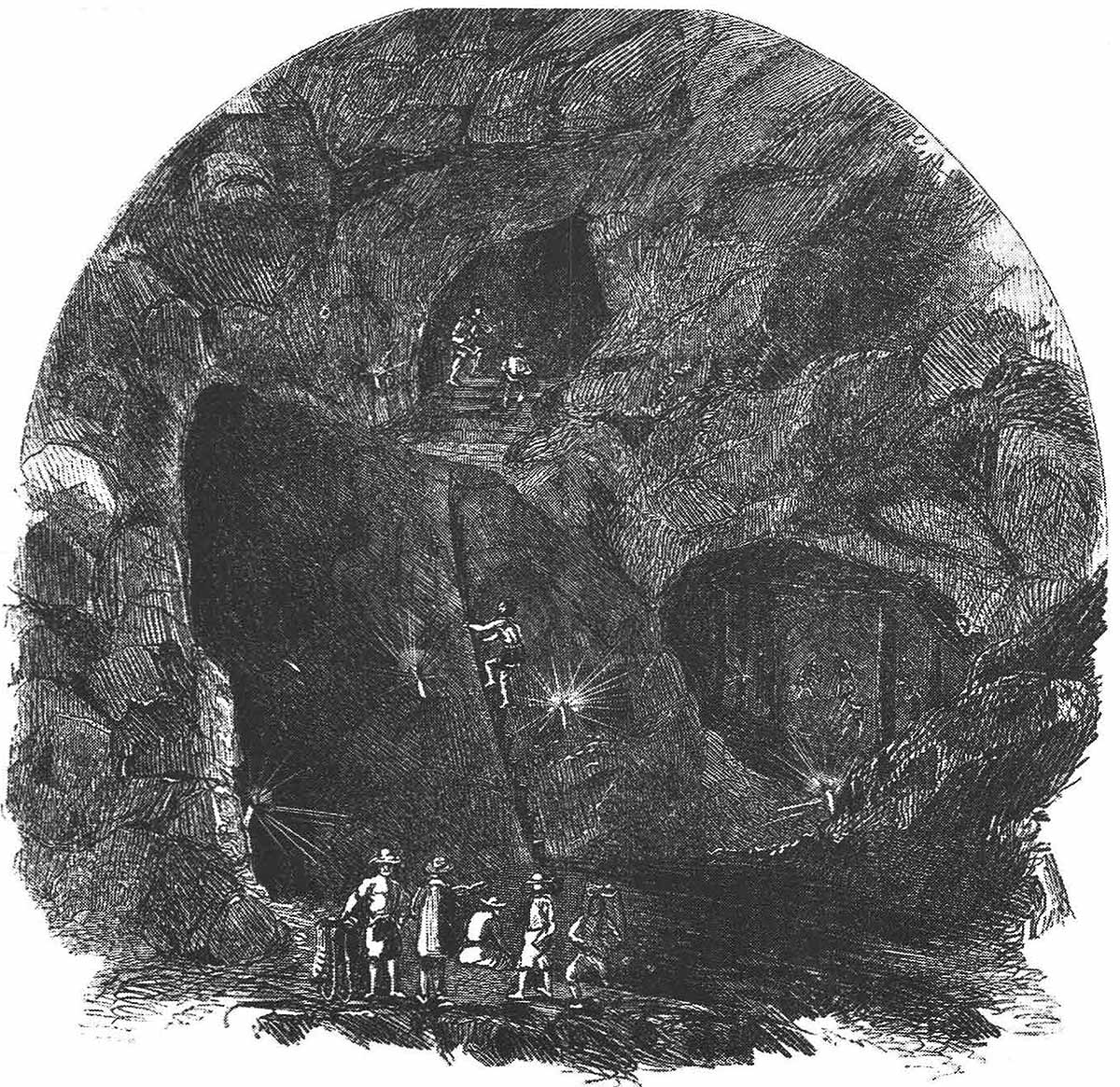
The Sunrise iron-ore mine utilized three major methods of mining: stripping (1899 - 1920), glory hole (1903 - 1941) and block caving (1930s on). All of these methods are represented in some way by the structures and features remaining on the site today.
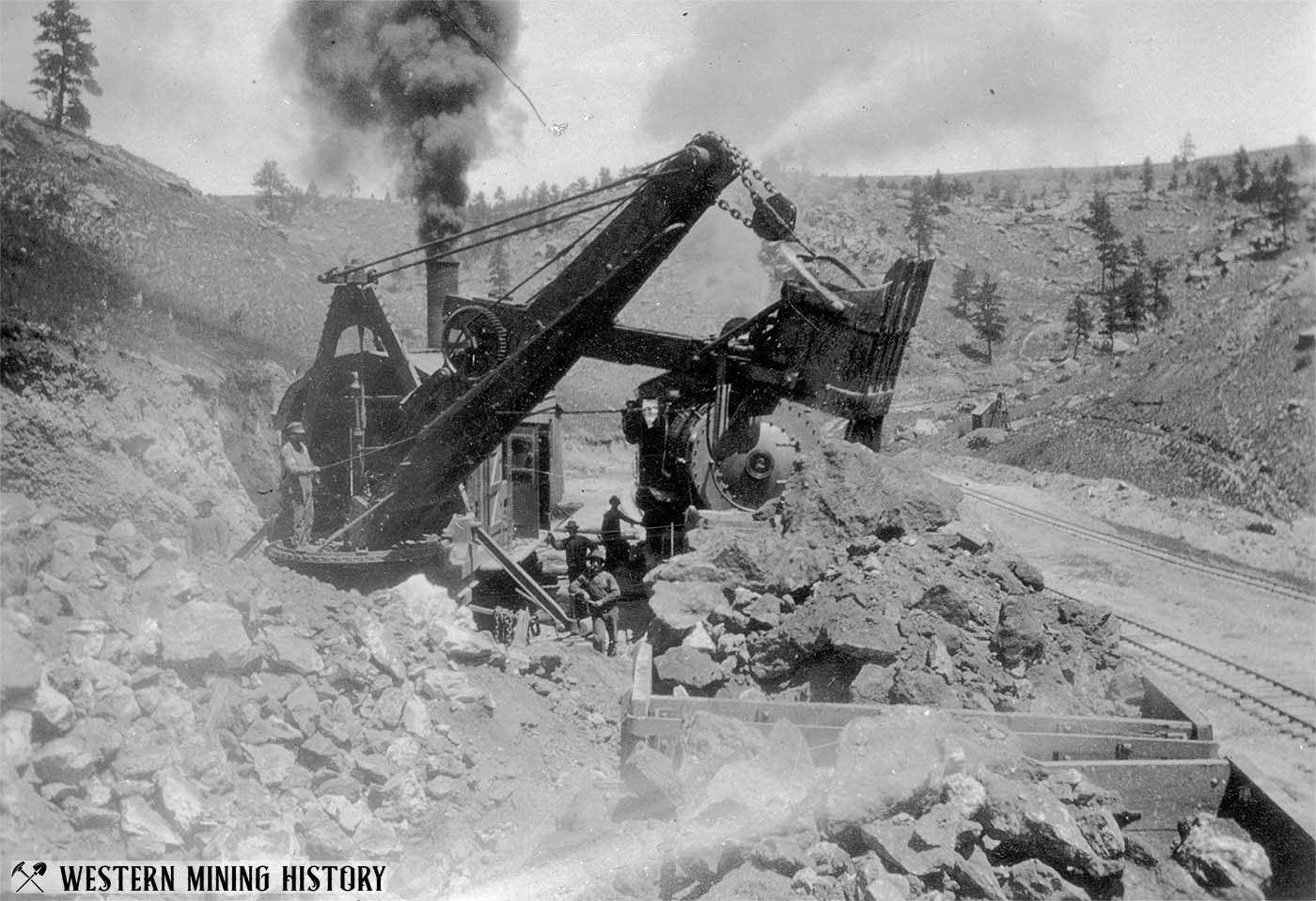
The Mowry Mine
(1871 Adventures in the Apache Country)
"The result of one day's working he found to be as follows: Produce of twenty tons in silver, $1200; in lead, $480-total, $1680; expenses of reduction, mining, etc, $400-profit, $1280. This result is highly encouraging; but the probability is, a more perfect and extensive system of operations would greatly enhance the net proceeds of the mine. "
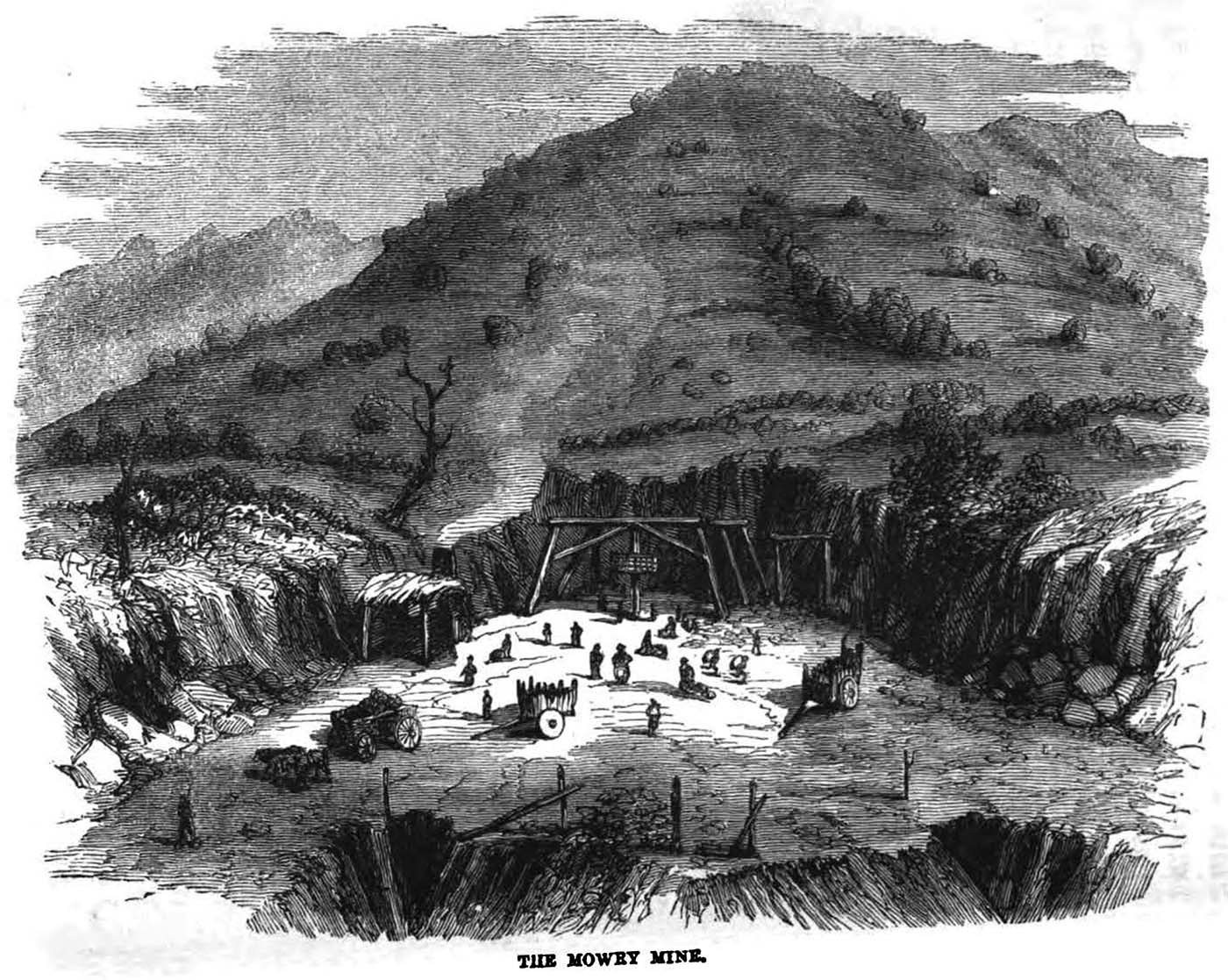
The Granby Mine at Anyox, B. C.
(1917 Engineering and Mining Journal)
"The Hidden Creek low-grade copper deposits in northwestern British Columbia have been developed on a large scale by the Granby company. Five separate orebodies have been outlined by diamond drilling and tunnel levels and are being mined by open-stope, milling and shrinkage methods. An attractive town site has been built and the organization is up to date in every respect."
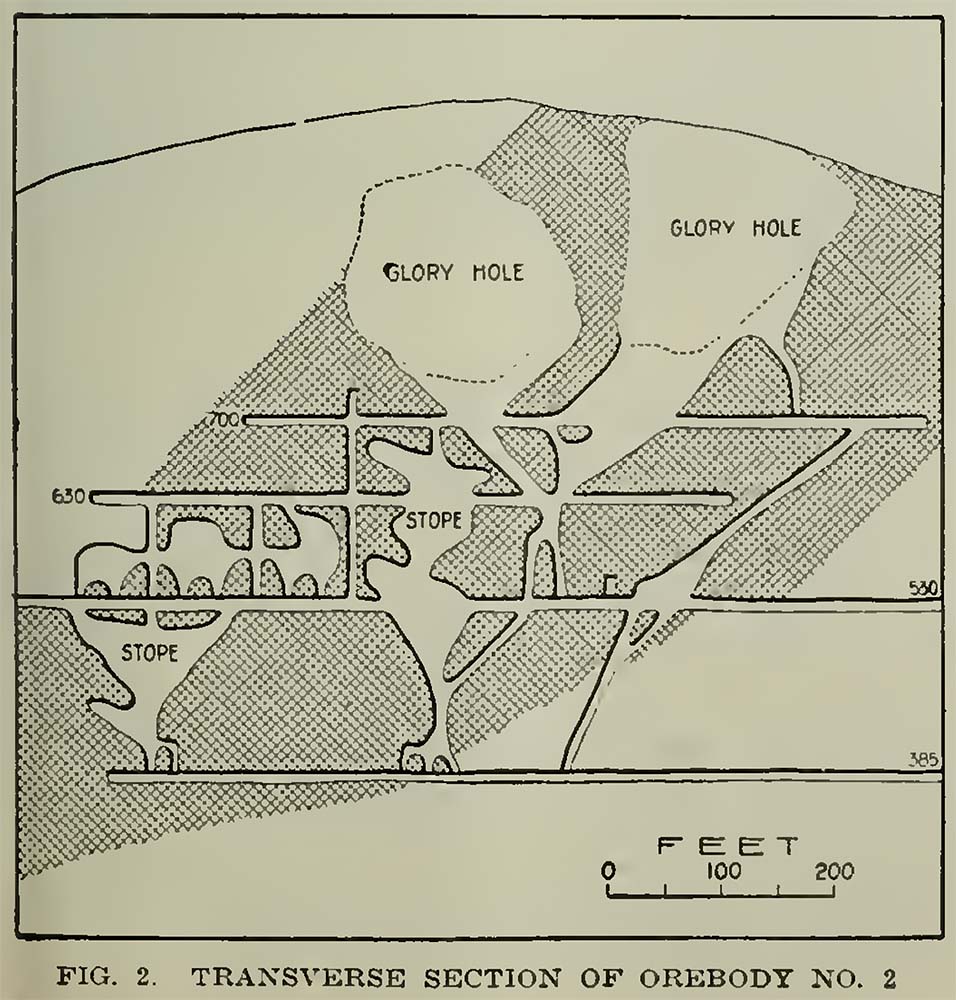
The White Pine Mining District, Nevada
(1869 Harper's Weekly)
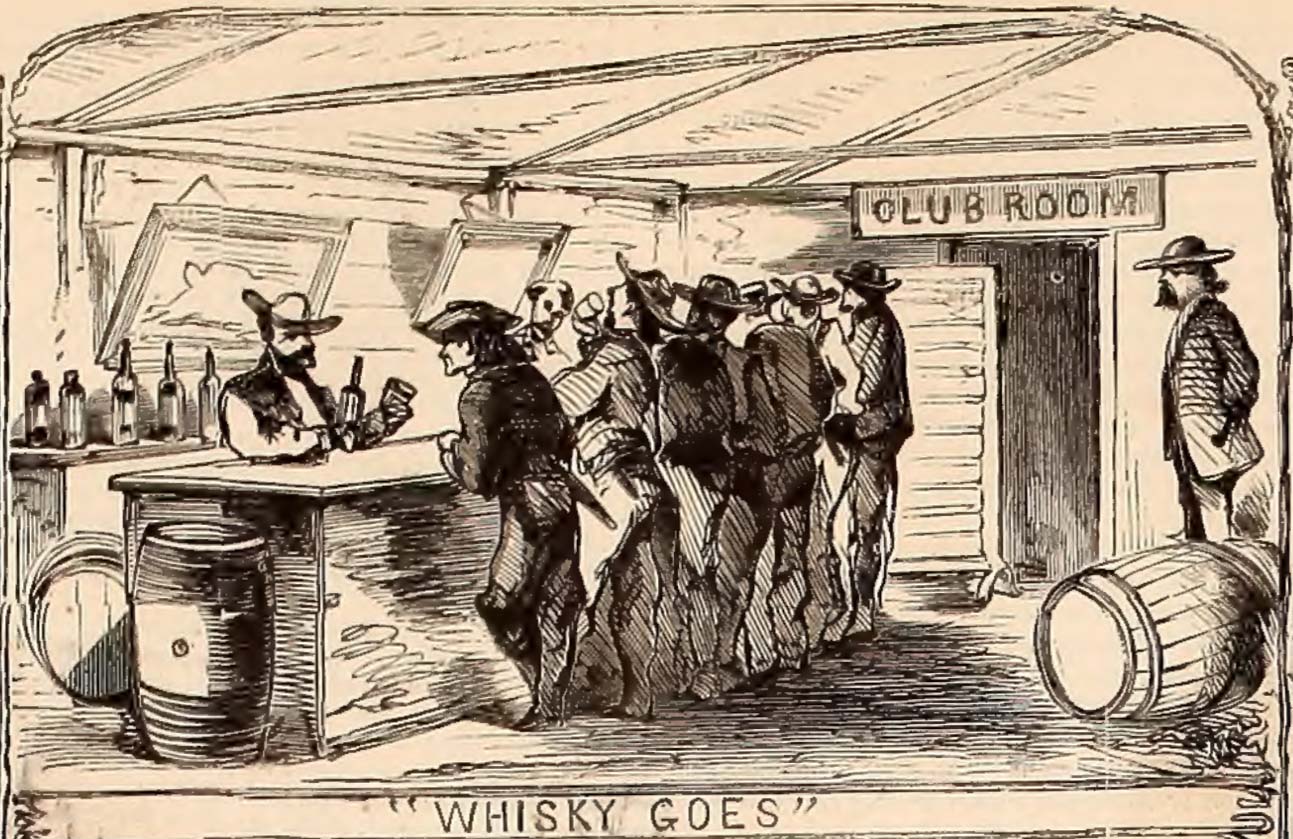
"There are no churches. Every other house on the street is a saloon, and is thronged with drinkers and gamblers. The gambling-room is back of the saloon. Here faro is played on an extensive scale, the stakes ranging from $1 to $1000."
Juneau, Silver Bow Basin, and Douglass Island Mines
(1885 Alaska, Its Southern Coast and the Sitkan Archipelago)
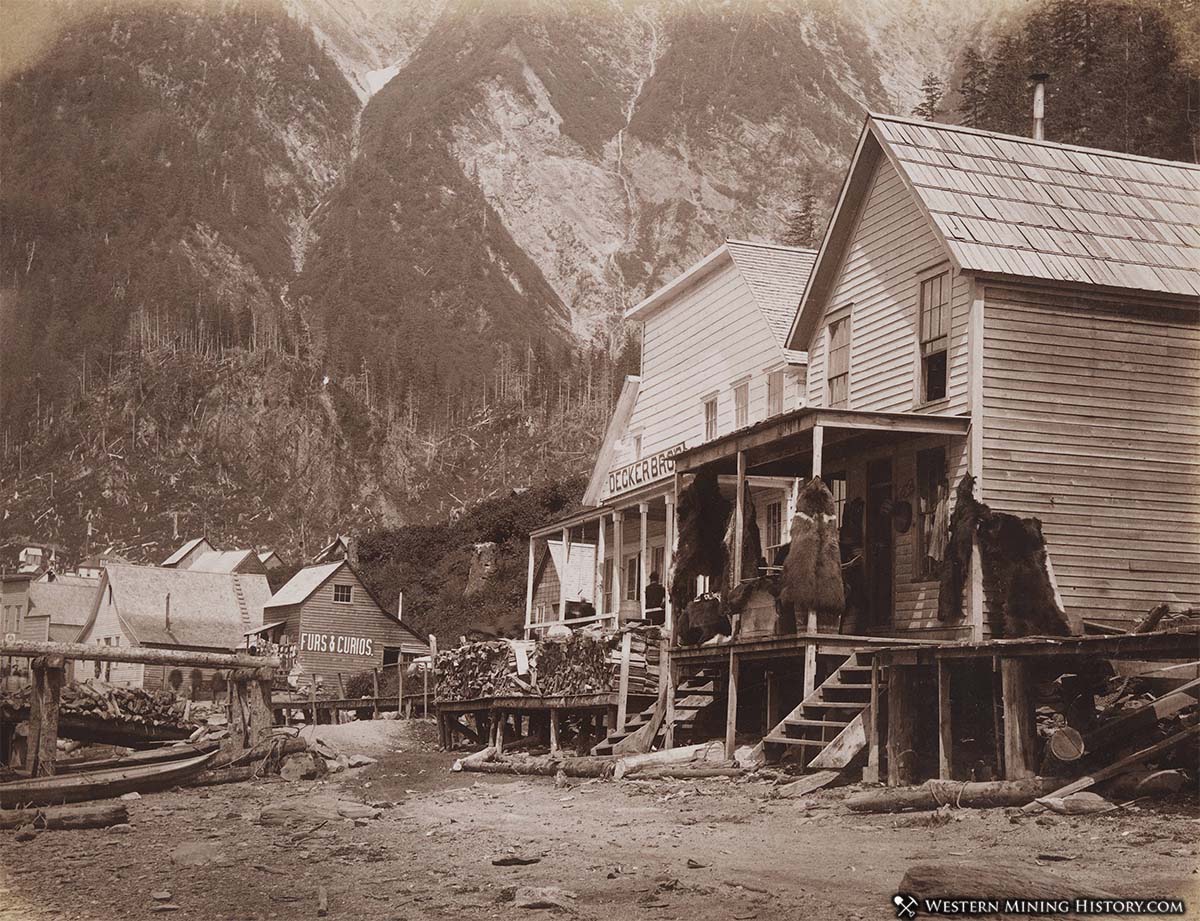
"The town of Juneau straggles along the beach and scatters itself after a broken, rectangular plan, up a ravine that opens to the water front. Lying at the foot of a vertical mountain-wall, with slender cascades rolling like silver ribbons from the clouds and snow-banks overhead, and sheltered in a curve of the still channel, Juneau has the most picturesque situation of any town on the coast."
Pioneer Work of the Telluride Power Company
(1905 Cassier's Magazine)
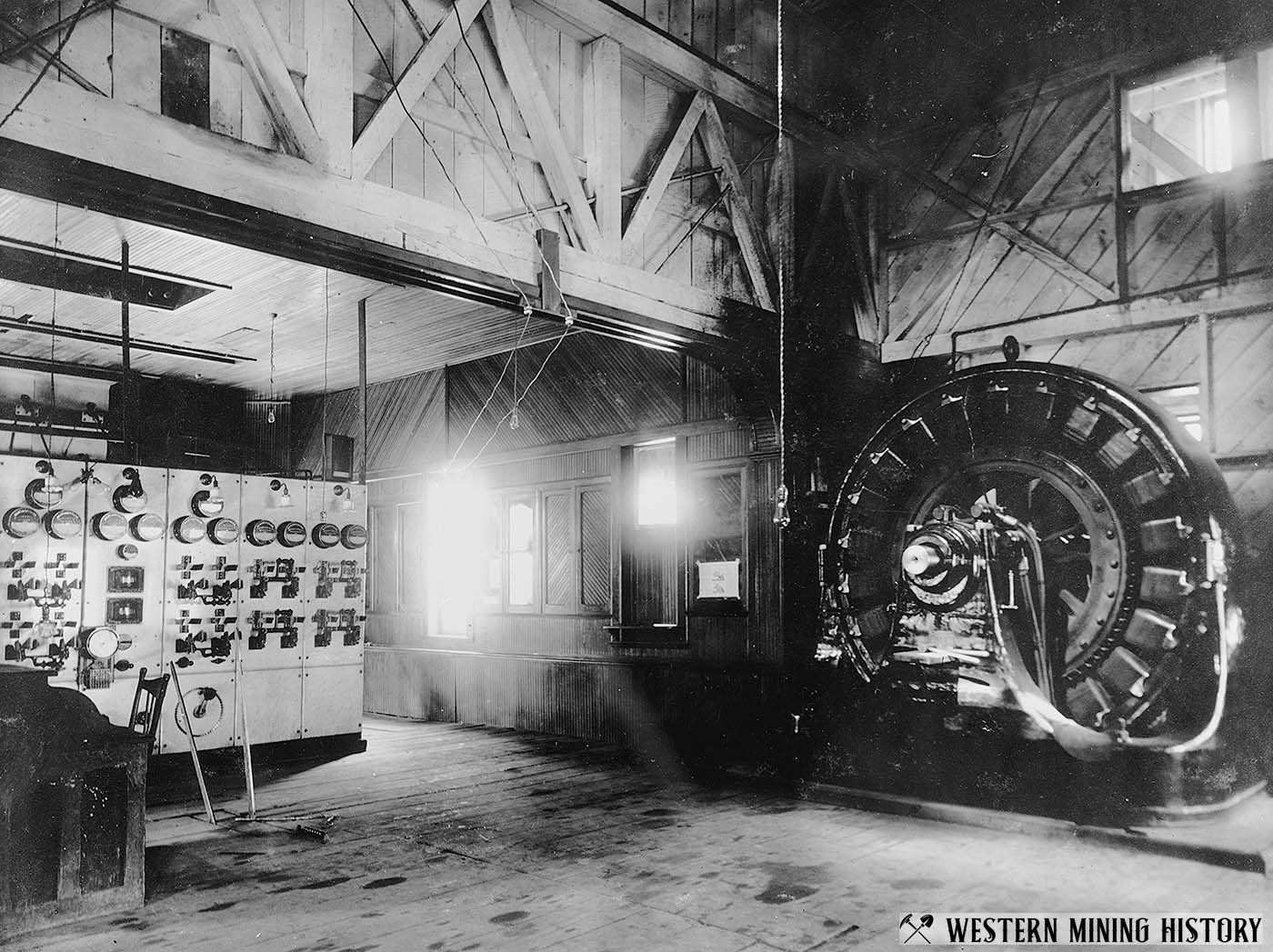
This 1905 article from Cassier's Magazine details the remarkable achievements of the Telluride Power Company in its efforts to link the mines of the San Juan Mountains with affordable hydroelectric power. The power plant at Ames is considered the first commercial application of long-distance alternating-current power transmission in the world.
Pearce, Arizona September 1897
(1897 Newspaper)
"The town is laid off with wide streets, those named being Wilcox, the main street, Water, Tombstone and Norton. In a few instances sidewalks have been laid. The water supply is had from a well 300 feet deep. The tank capacity is 10,000 gallons, subject to an increase to 50,000 by means of a pump. This is controlled by Williams & Harper, both heretofore mining in Stein's pass and ranching in the Chiricahua mountains. Delivery of water is made by tank and the aqua is sold at 25 cents per barrel, or 40 cents delivered. "
The Eberhardt Mine
(1869 Newspaper)
"The ledge of pay ore, or ore that will mill from $600 to $18,000 per ton, is 183 feet wide, and how deep it will extend no one can tell."
An Army of Furnace Builders
(1869 Newspaper)
Description of the proliferation of furnaces for the treatment of ore at Nevada's White Pine district.
Pains and Perils of Mining
(1883 Comstock Mining and Miners)
This chapter from the 1883 publication Comstock Mining and Miners reveals many details of how Comstock miners dealt with the extreme heat in the mines: "Tons of ice were sent down daily into the mines; the half-fainting men chewed fragments greedily to cool their parched throats, and carried lumps in their clinched hands through the drifts; iced water from the tanks was drank in extraordinary quantities. In the hotter levels three gallons was a moderate allowance for one man during a shift of 8 hours; and 95 pounds of ice was the average daily consumption of every miner employed in the hottest workings of the California and Consolidated Virginia mines during the summer of 1878."
The Atlanta Lode
(1895 Newspaper)
"The conversation turned on the great Atlanta lode, which at this time is attracting so much attention, and the Democrat learned that it was discovered in party of prospectors who left Warrens diggings on the 5th of July that year for the purpose of prospecting on the upper tributaries of the south fork of Salmon river, a region at that time which had never been trodden by the foot of white man."
Among Rich Mines and Gold-Ribbed Hills of Arizona
(1904 Leslie's Weekly)
"Such were the dangers of the early miners in Arizona. But there were other serious obstacles as well. They were scores of miles from the railroads or even the farthest outposts of civilization, and over the mountains which intervened they were obliged to pack all their food and other supplies. Nevertheless they took out millions of the precious metals, risking their very lives for the rich reward of gold."
Highgrading at Randsburg, California
(1908 Newspaper)
This article from the Los Angeles Times describes a plot to destroy part of the Yellow Aster mine with dynamite to cover up the theft of high-grade gold ore.
At a New Mining Camp (Creede)
(1892 Harper's Weekly)
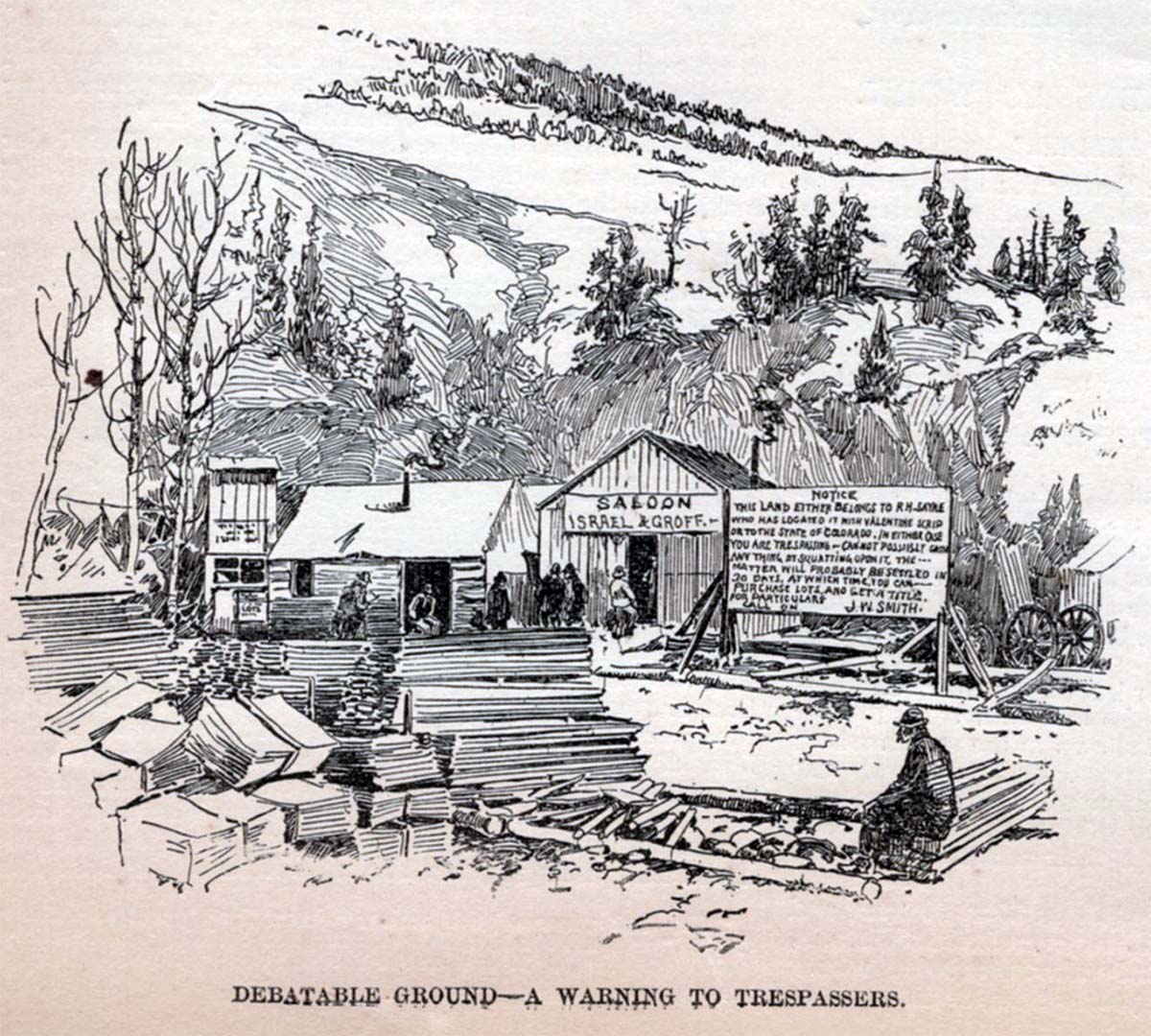
"Creede lies in a gully between two great mountains. In the summer the mountain streams wash down into this gully and turn it into a little river; but with the recklessness of true gamblers, the people who came to Creede built their stores, houses, and saloons as near the base of the great sides of the valley as they could, and if the stream comes next summer, as it has done for hundreds of years before, it will carry with it fresh pine houses and log huts instead of twigs and branches."
Creede Camp
(1892 Newspaper)
The whirligig of fortune has stopped at Creede. Nothing but yesterday, it is a town today and will be a city tomorrow. Many a man will date his rise in the world from the hour be stepped into Willow gulch; many another will wearily plod back to the valley cursing his luck.
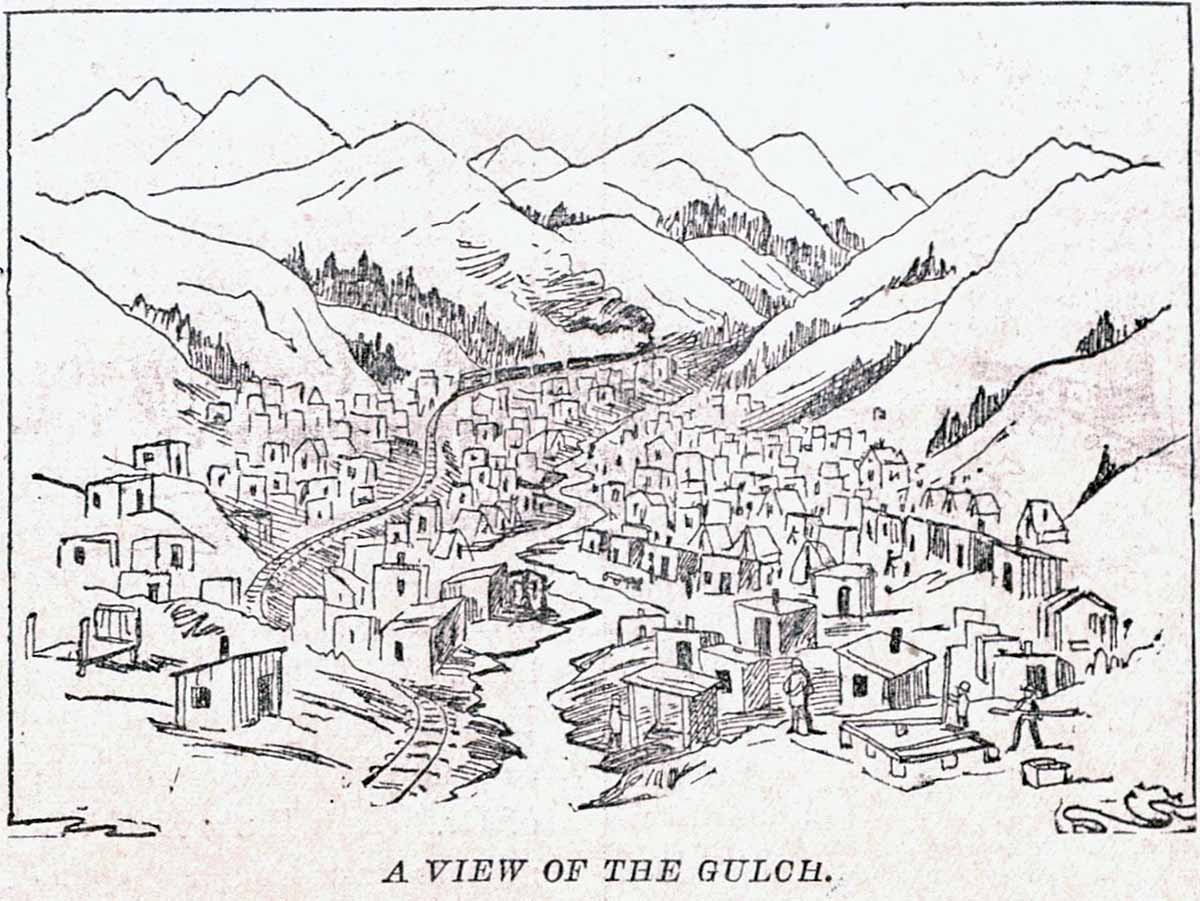
Life in the Mining Camp at Randsburg
(1897 Newspaper)
"The town is located between the Rand group and the mines on the Butte Ledge, and extends across from Rand Gulch on the west to Fiddler's Gulch on the east. There are from 1500 to 2000 people in and around Randsburg, and every kind of business is represented."
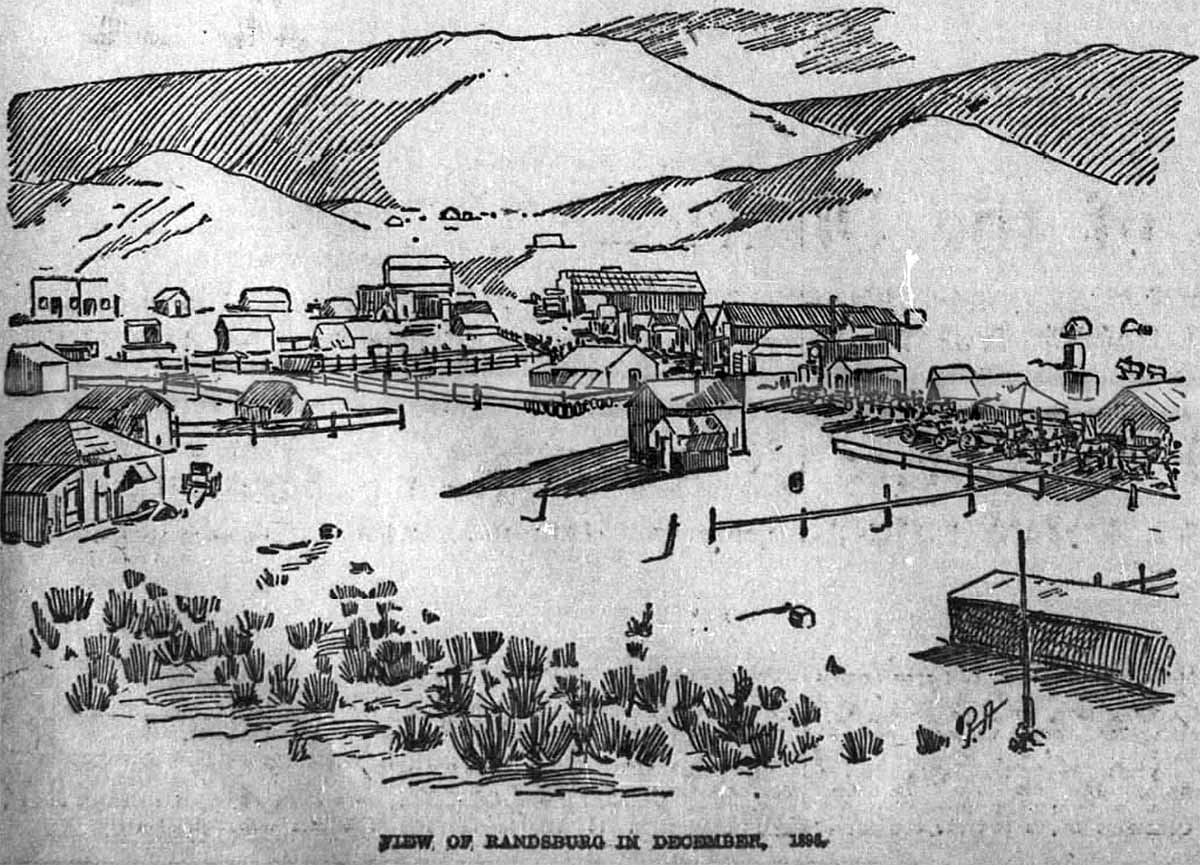
History of the Ajo Mining District
(1946 USGS)
Ajo is believed to be, after Santa Rita, N. Mex., the first copper district in the Southwest to be worked by Americans.
Recollections of an Electrician at Kennecott
This letter from Wesley O. Bloom was published in the NPS publication "Kennecott Kids - Interviews with the Children of Kennecott." Bloom describes his time working as an electrician at Kennecott for over two years in the late 1930s.
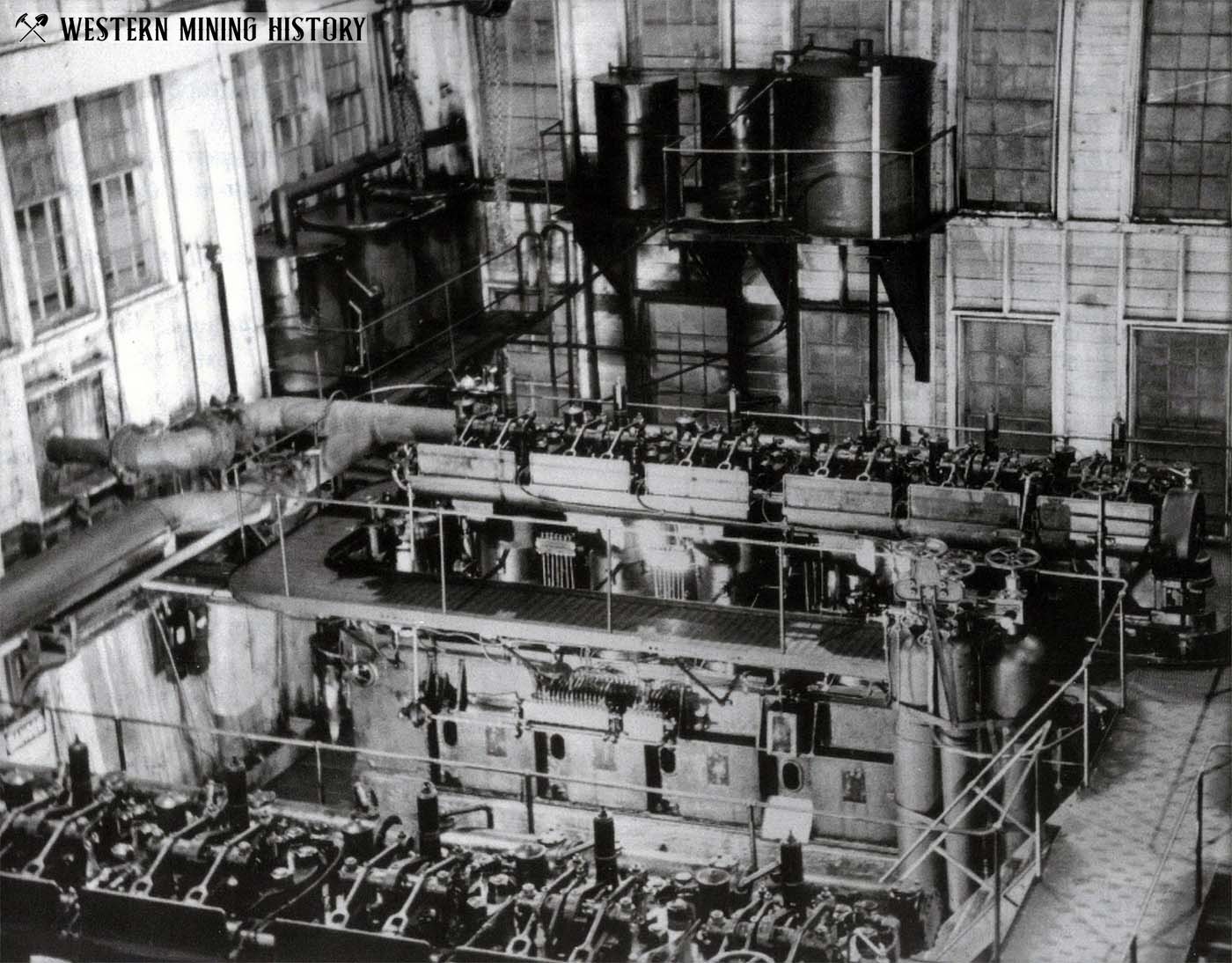
Discovery of the Silver King
(1875 Weekly Journal-Miner)
This article from 1875 describes the discovery and early development of Arizona's famous Silver King mine.
The Quicksilver Mines of New Almaden in 1857
(1863 Harpers New Monthly Magazine)
This 1857 report (published in 1863) gives a detailed description of the early works of the New Almaden quicksilver mines.