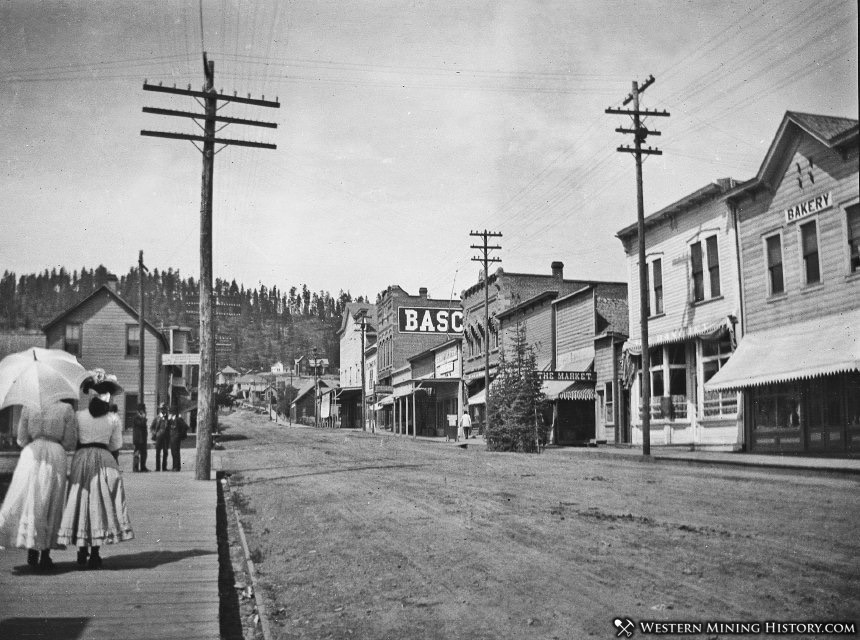
Sumpter History
In 1862, five men from South Carolina were on their way to the California gold fields. While camped near cracker creek, they discovered gold in the creek gravels. The men decided to stay in the Sumpter area and built a cabin which they named Fort Sumter after a famous Civil War era fort in South Carolina.
The isolated town grew slowly over the next 30 years. The availability of heavy mining machinery in the 1890's, and the arrival of the railroad in 1897 resulted in rapid growth of the town. By the early 1900's Sumpter had thousands of residents.
The mines around Sumpter were producing millions of dollars in gold every year, earning Sumpter the title of "Queen City". The first of the massive floating gold dredges began mining river gravels just outside Sumpter in 1913.
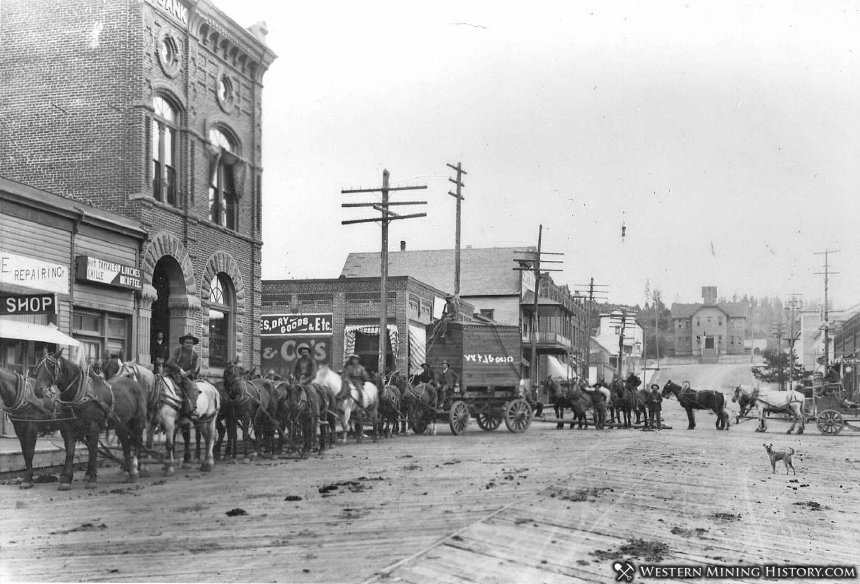
Sumpter suffered the fate of many prominent western mining towns. In 1917 most of the town burned to the ground. Dwindling mine production at the time resulted in little interest in rebuilding. Many of the towns miners and full time residents moved on to other districts. The railroad made its last run in 1947. The last of the gold dredges ceased operations in 1953.
Today Sumpter is a quiet mountain town that is popular with hunters in the Fall and snowmobilers in the Winter. Small scale gold mining is still practiced in the surrounding mountains. A gold dredge is restored and is on display at the Sumpter Valley State Heritage Area.
Sumpter, Oregon as Described in the Year 1900
The following text was published during the year 1900 in a promotional flyer by the Oregon Railroad & Navigation Company of Portland, Oregon
Thirty-two miles west of Baker City is Sumpter, the western terminus of the Sumpter Valley Railway, a narrow-gauge road that is said to have paid over 40 percent dividends on the past year's business.
Sumpter is a young wonder. Two years ago it was unheard of, except as the camping place of a small detachment of United States troops the day the Charleston-Harbor fort was fired upon, and the spot where recently a little lumbering railroad has run out in the woods.
A year and a half ago, it was a crossroads village, with perhaps 150 inhabitants. In May, 1899, it had about 250; and in May, 1900-just a year later it is a rushing, bustling little city of nearly 4,000 population, with something like 150 business houses, including 25 hotels, restaurants and lodginghouses, 23 saloons, three banks, four assay offices, 15 or 20 real-estate and brokers' offices, three live newspapers, four sawmills, a brewery, an opera house, news agencies, brickyards, millinery and jewelry stores, dance houses, shooting galleries and all the other boom mining camp establishments.
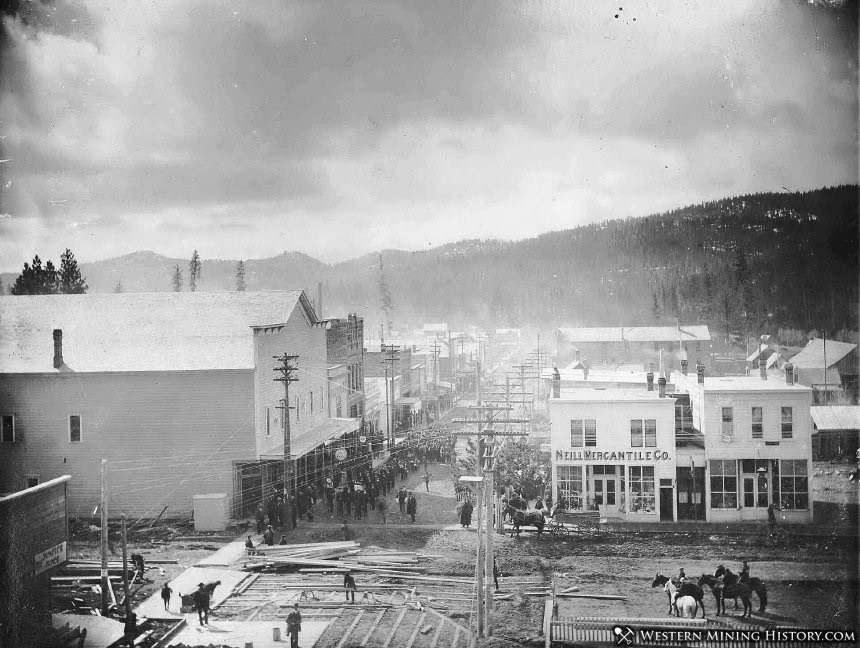
Sumpter has churches, good schools, telegraph and telephone connection with all the great surrounding mines and the outside world in general, a stalwart fire department, a $75,000 waterworks system with 15 fire hydrants, and a superb electric-light plant with 20 or 30 arc lamps, and 2,000 incandescents.
All last winter, amid snow and what passes for cold in Oregon, carpenters and bricklayers worked, at big wages, every hour of daylight; and yet people poured in faster than roofs could be reared to shelter them.
Sumpter real estate has gone kiting skyward. A lot, that a Portland drummer named Collett had to take, two years ago, for a bad debt of $100, was recently sold for $2,250; and one, for which Ed. Geiser paid $200 in November, 1897, brought $7,000 in November, 1899—3,400 per cent. advance in 24 months, or 141 per cent. a month, which is a pretty lively speculative profit in any age or land.
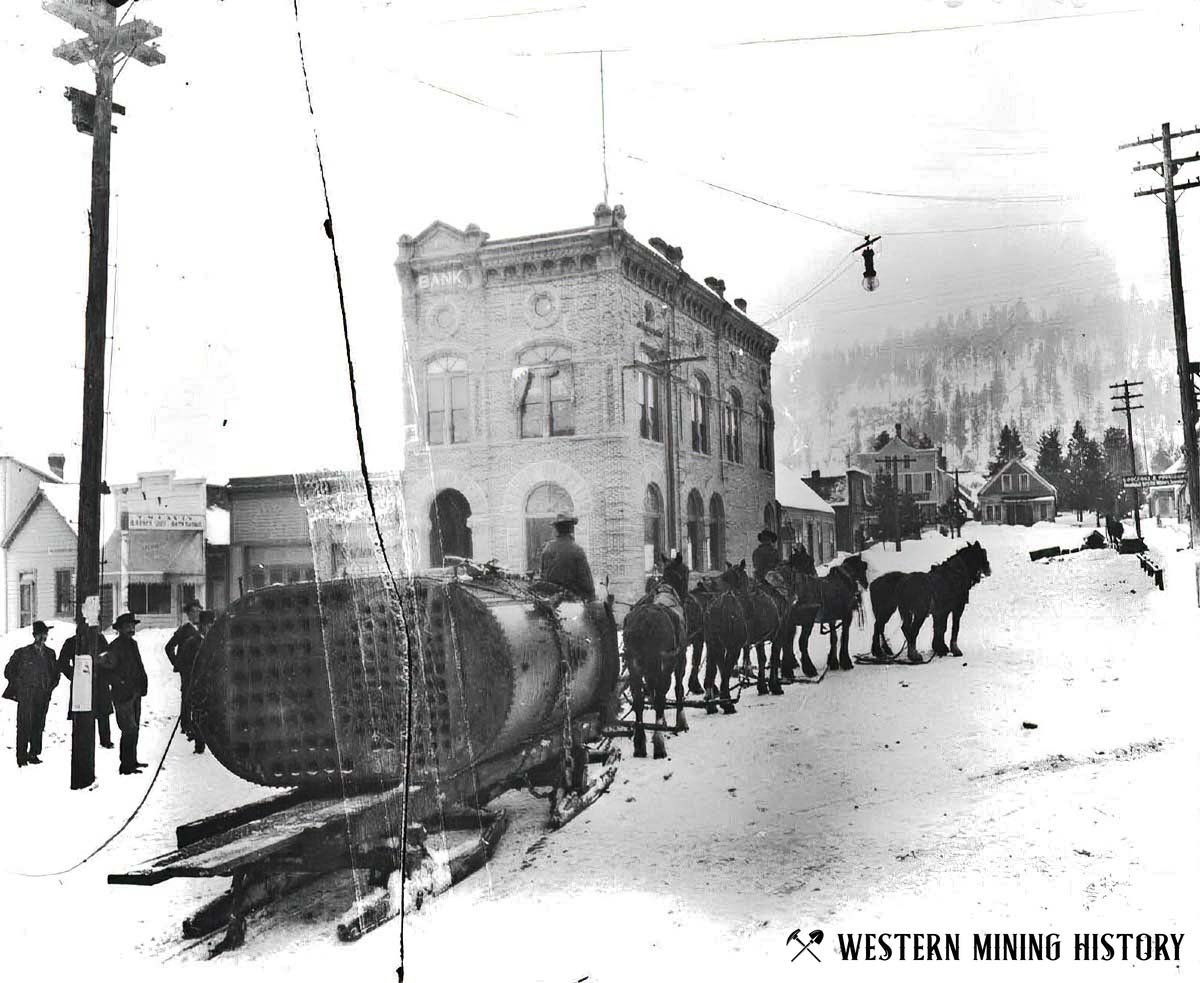
In November, 1899, a Mr. Mayer leased a business room for a year at $50 a month; and, in December, he re-let it for the remaining 11 months of his lease at $100 a month. For the week ending December 18, 1899, the Sumpter real-estate business, including town-lots, mining-claims, bonds, mortgages and releases, amounted to $136,604-more in that line than was done during the same time in St. Paul, with 165,000 population.
Sumpter has six stage, transfer and freighting companies, and seven daily stage lines, employing 200 horses, carrying passengers, mails, express matter and special freight to and from the tributary mines and mining camps; and it handles from 3,000,000 to 6,000,000 pounds of freight a month.
Seven carloads of mining and milling machinery were recently received in a single day; and April 1, 1900. Three big warehouses on the Sumpter Valley Railway contained 150 carloads of freight waiting for the mountain roads to dry up sufficiently to admit of heavy teaming.
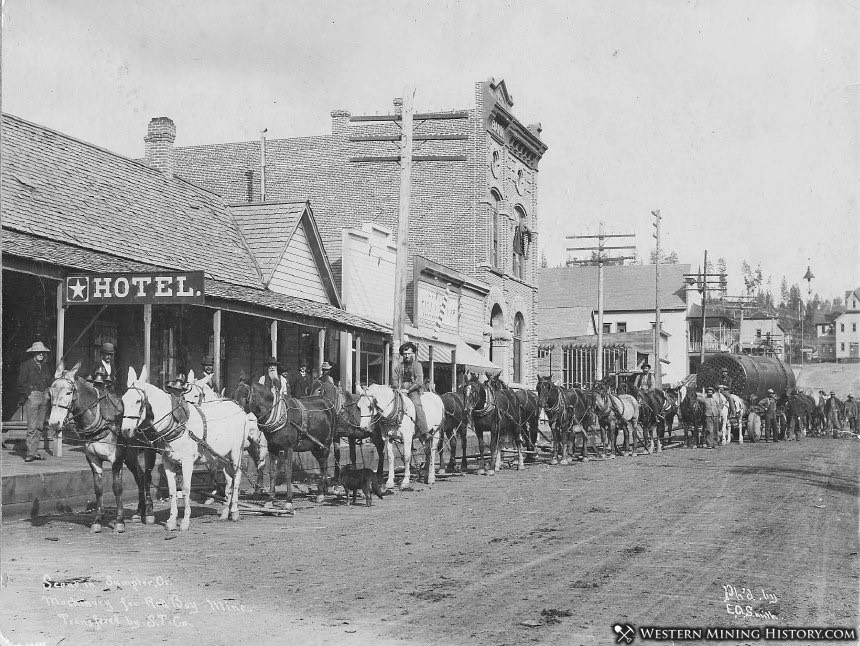
Sumpter's little railroad, last year, hauled out 7,000 carloads of timber alone, or about 600 carloads a month; and, with the constantly increasing rush of incoming travel, machinery and supplies, its facilities are being taxed to the utmost limit.
In short, Sumpter has risen, in a single year, from nothing almost to the size of Deadwood in the palmiest days of the Black Hills, and its boom has seemingly come to stay. The town is literally built on golden rock. It is walled in by mountains of gold-seamed quartz, and all its streams roll over golden sands.
It is the center and supply and distribution point of hundreds, if not thousands, of square miles of gold-bearing territory, whose riches pass all ordinary computation. Immediately around it and tributary to it, 296 stamps are pounding out over $2,000,000 a year in gold bricks and concentrates, and every day is adding to the number of the mines and mills, and the amount of the yield.
Oregon Mining Photos
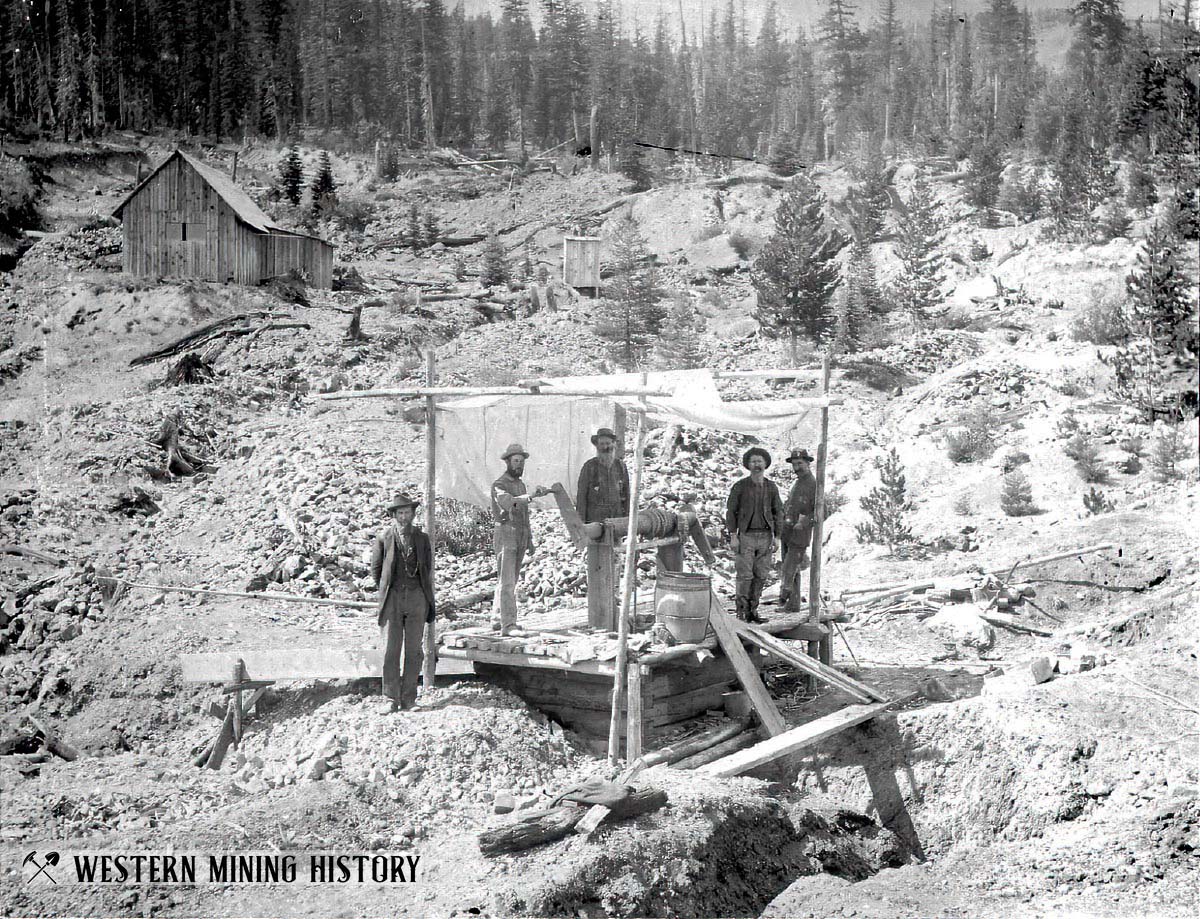
Check out this collection of some of Oregon's best historic mining scenes at A Collection of Oregon Mining Photos.
Oregon Gold
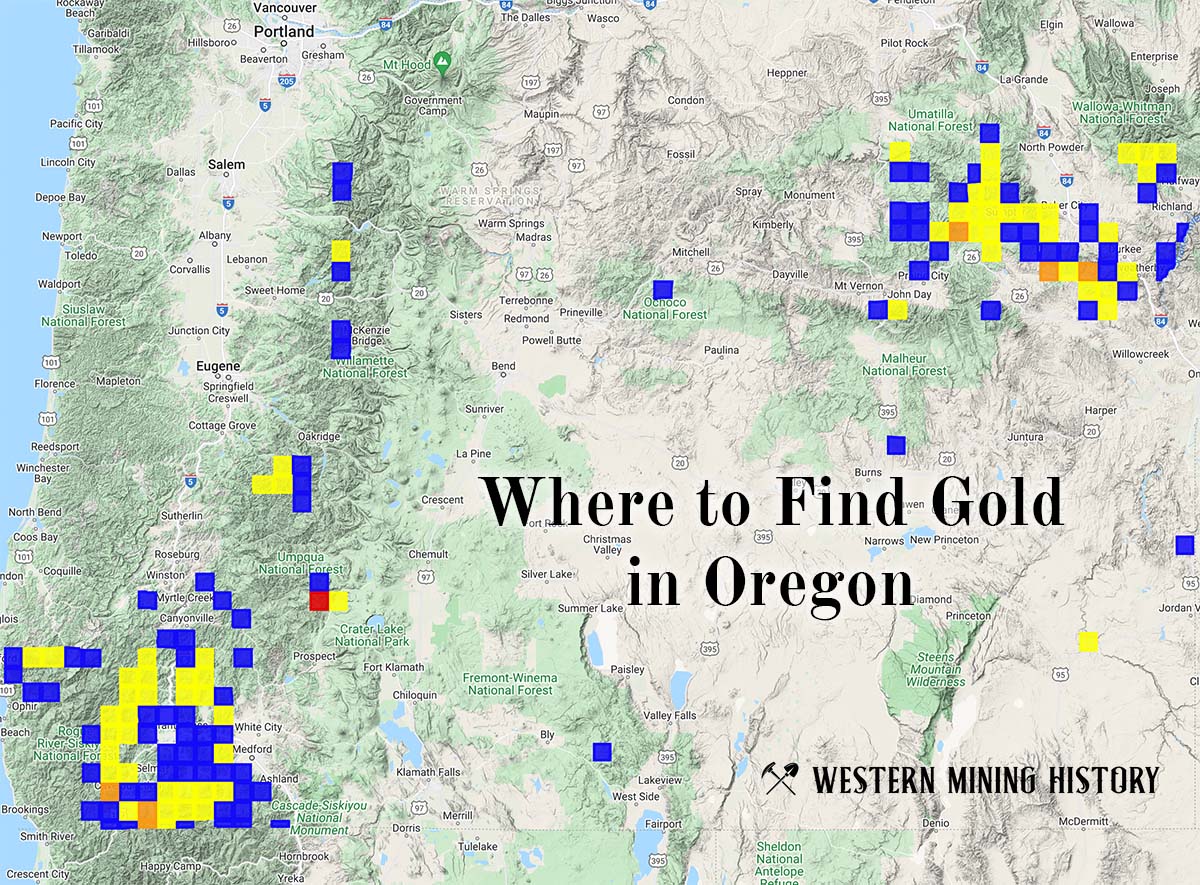
"Where to Find Gold in Oregon" looks at the density of modern placer mining claims along with historical gold mining locations and mining district descriptions to determine areas of high gold discovery potential in Oregon. Read more: Where to Find Gold in Oregon.
