Deadwood History
The Black Hills of South Dakota were long part of Lakota Indian territory and were considered sacred by the Lakota. The Fort Laramie Treaty of 1868 established the Great Sioux Reservation in the Black Hills.
Rumors of gold deposits in the Black Hills were confirmed by Lieutenant Colonel George Armstrong Custer’s exploratory expedition for a new fort in 1874. Gold was discovered that summer by two members of the expedition who were panning the gravels of French Creek, and word of the discovery spread quickly.
The first miners in the Deadwood area came in two separate parties late in the summer of 1875. One included William Smith who broke a trail from Montana and found a small amount of gold near the mouth of a creek. They named the creek Whitewood for the thick growth of cottonwood timber.
The other party, including A.S. Blanchard, came from Custer and dug through a gulch of dead timber–giving the name Deadwood to the creek–and found rich placer deposits. Both groups left suddenly when seeing U.S. Army soldiers approaching, but later returned to stake their claims, building cabins to spend the winter.
For the first year or so, soldiers escorted trespassing miners off of Sioux reservation lands to army forts in neighboring areas. By 1876, too many miners were arriving in the Black Hills and the Army gave in.
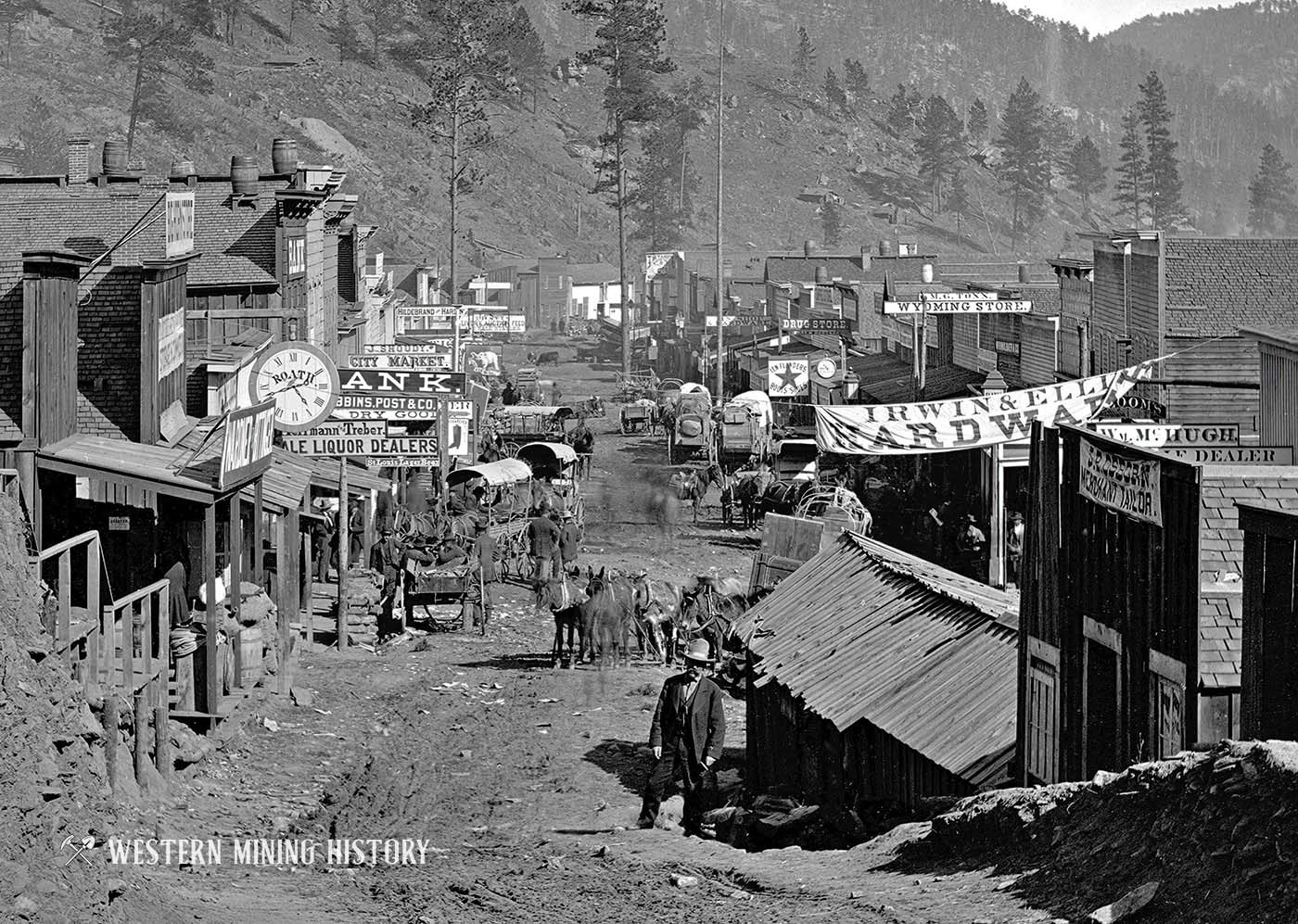
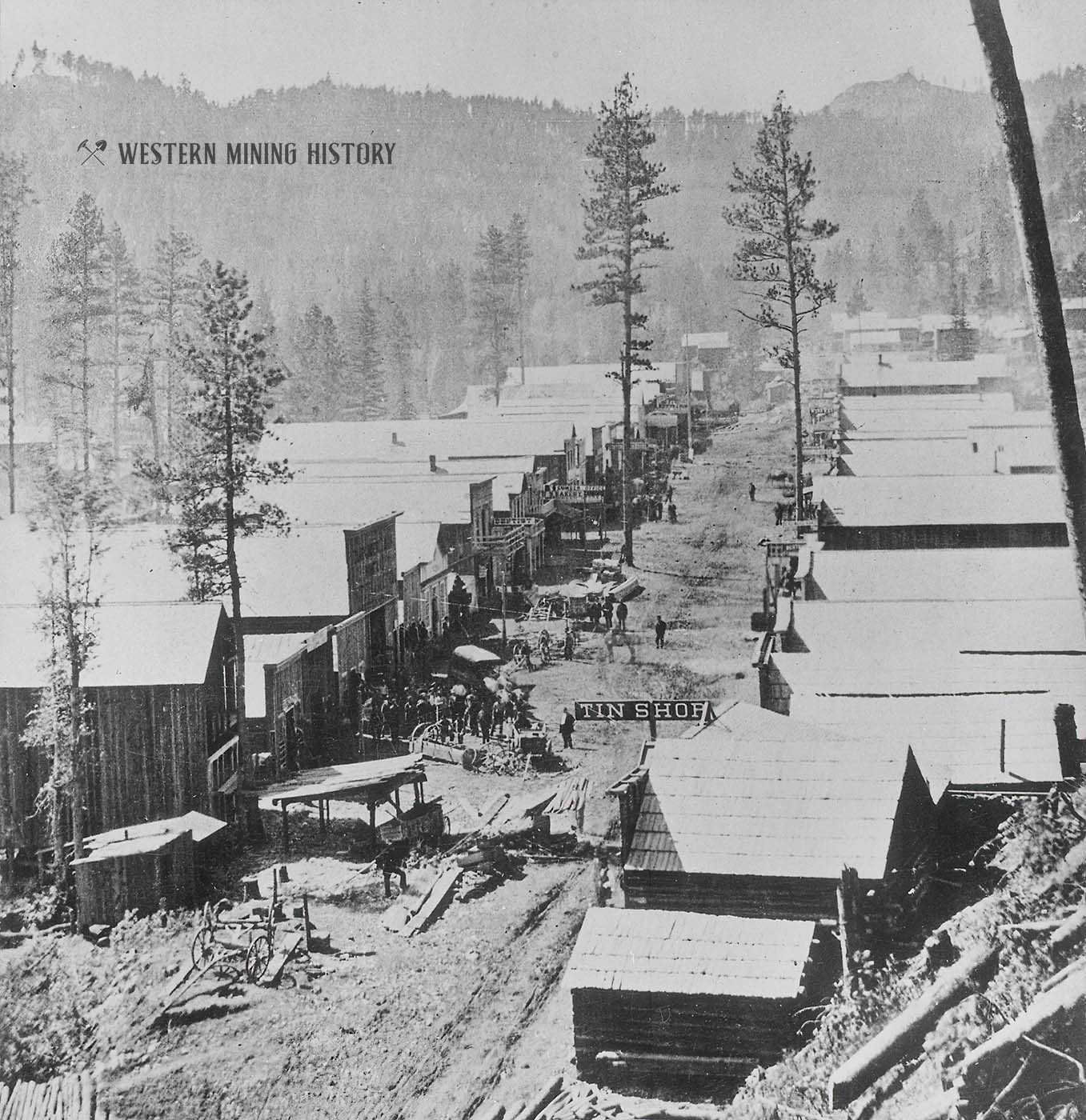
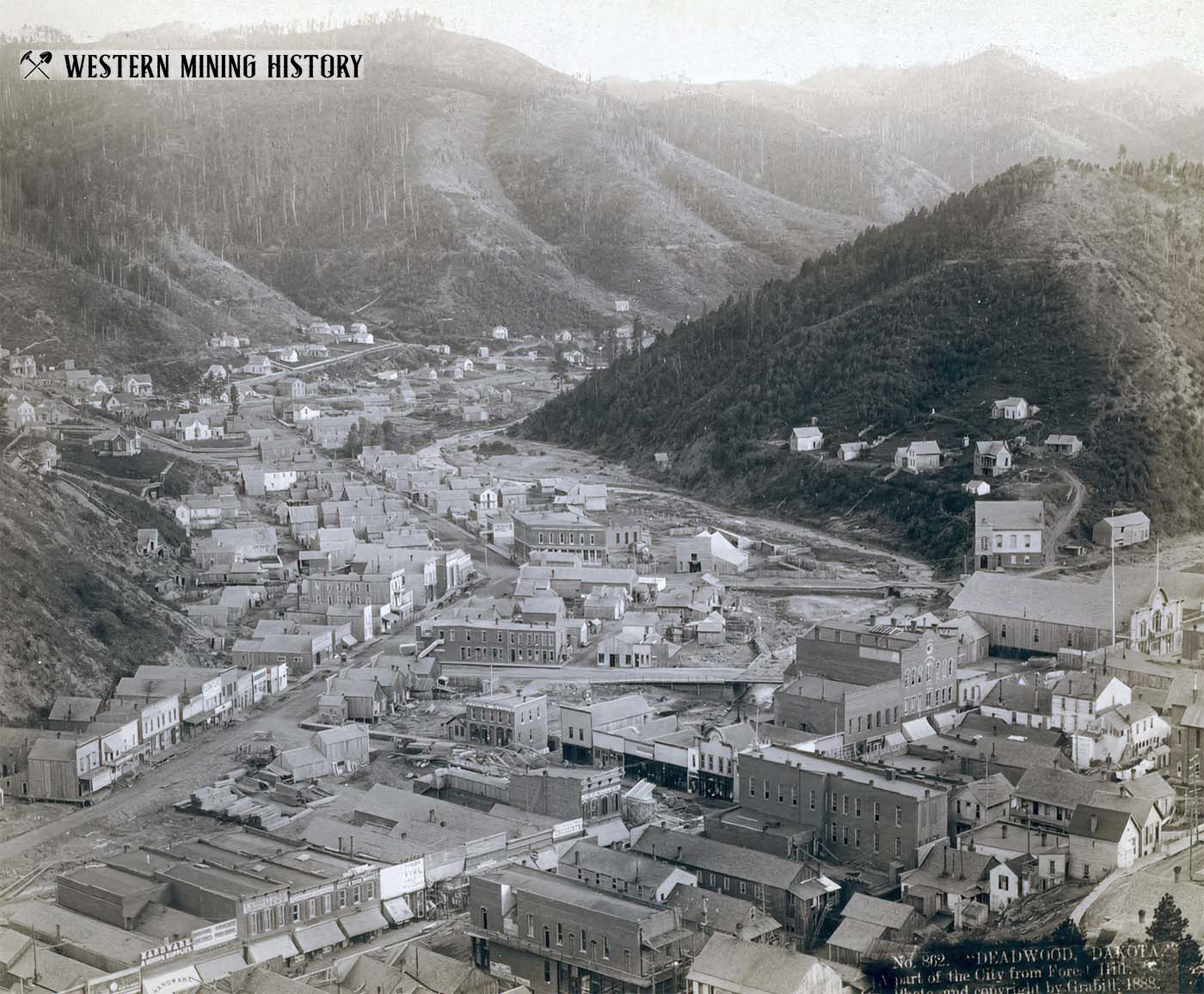
The town of Deadwood, or Deadwood Gulch, was laid out in April 1876 below the junction of the two creeks. A trail had been cleared through the gulch to create the main street. The first dance halls, also known as “hurdy-gurdy houses” opened in May. Deadwood contained little more than a dozen buildings at its core and more wooden buildings, shacks, and cabins were hastily built.
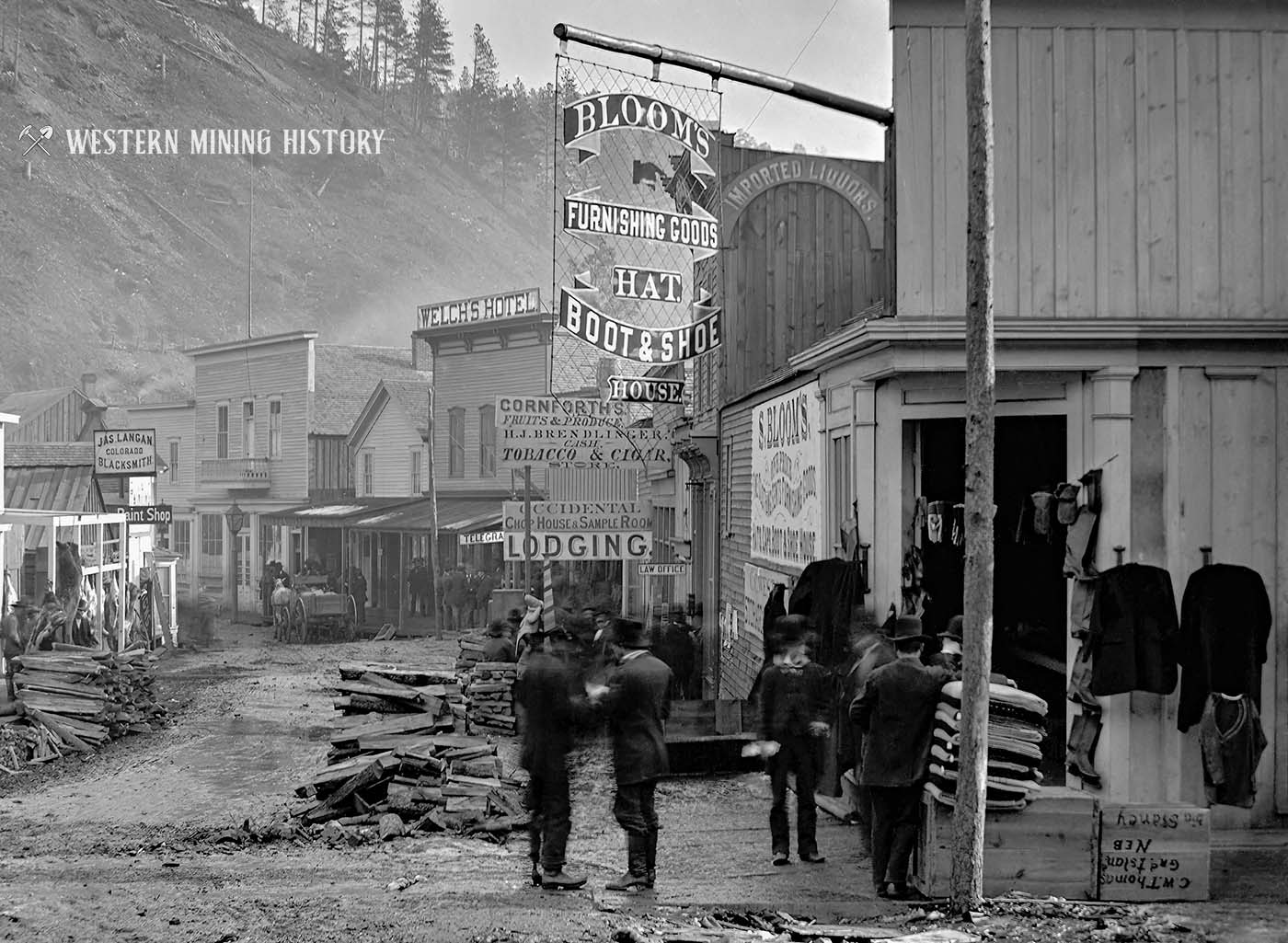
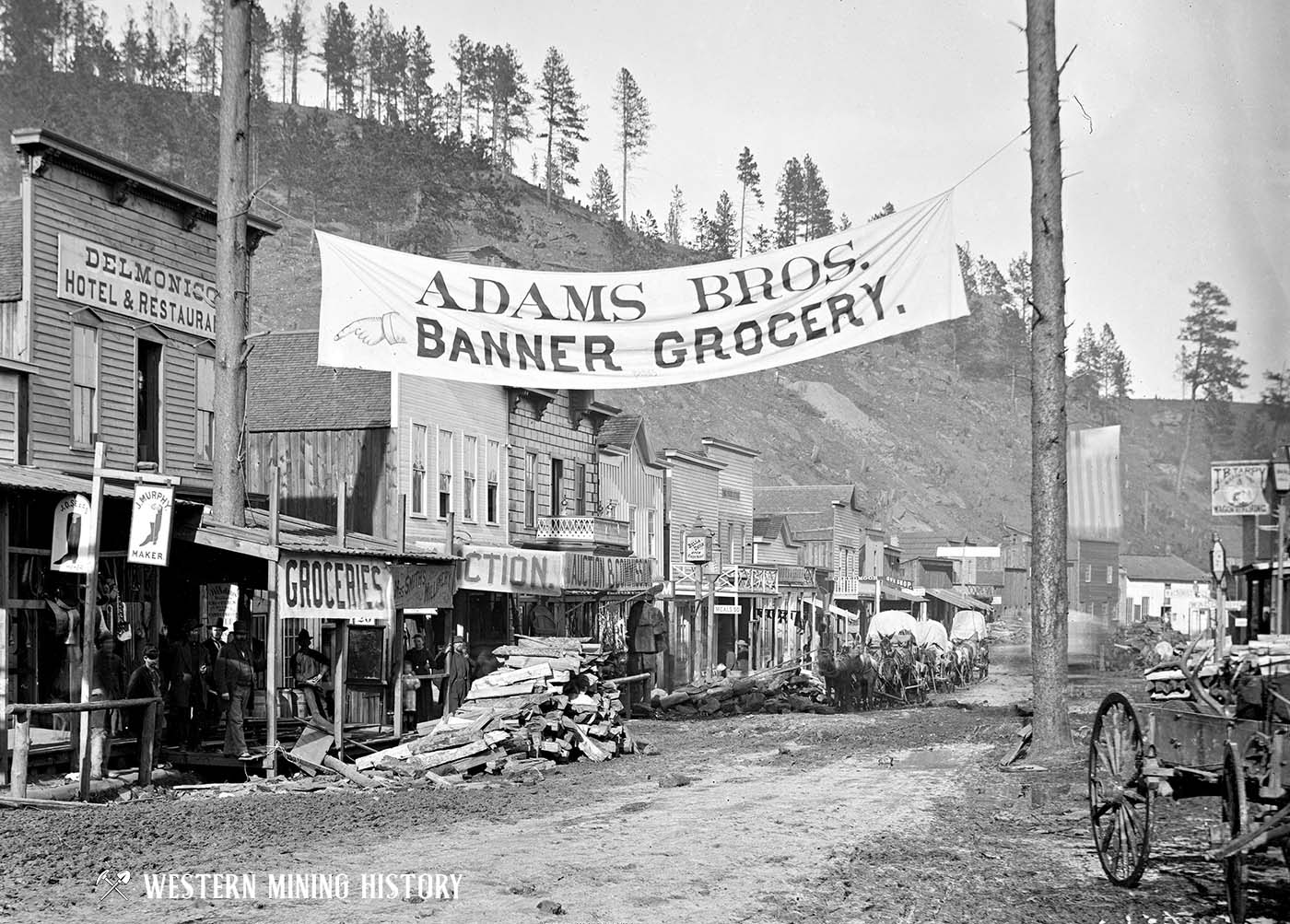
The town grew at an incredible pace in 1876 with the first newspaper, The Black Hills Pioneer, printing in June. Around 2,000 miners, businessmen, and “working“ ladies were in Deadwood by August. Deadwood had a total of 166 businesses by September. Twenty-seven of the businesses were saloons; a year later there were seventy-five. Telegraph lines reached the town in December.
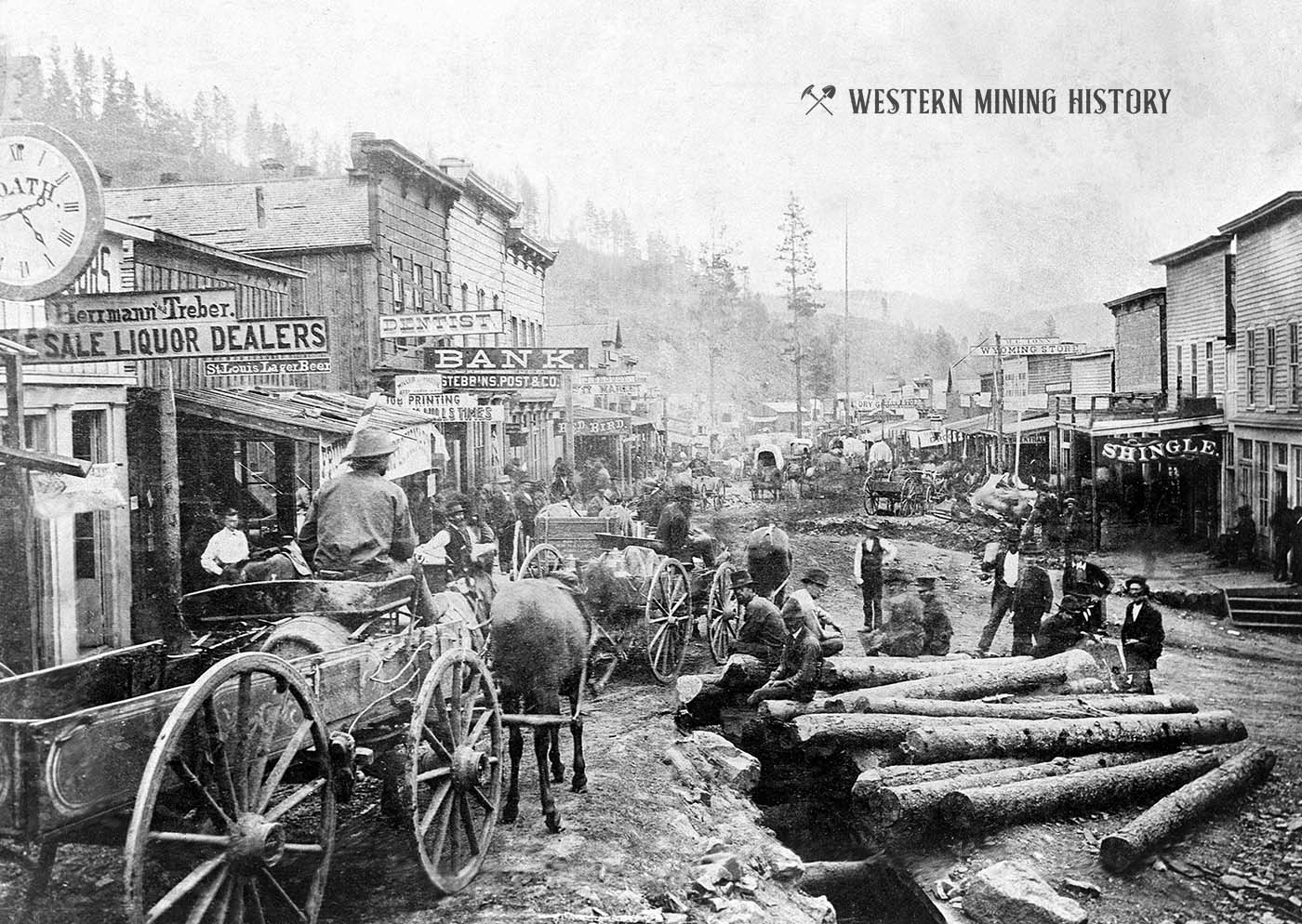
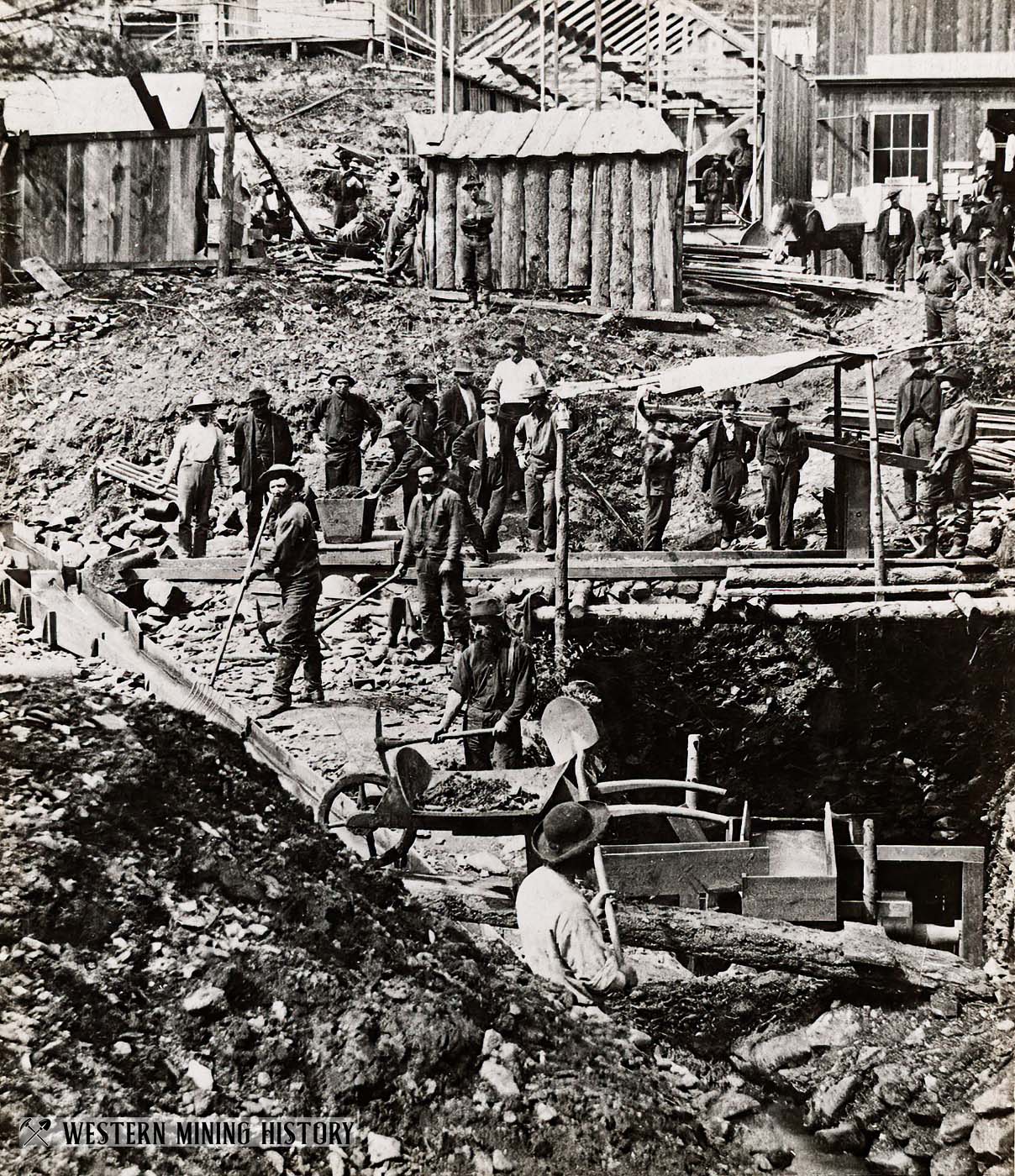
The average placer mine in Deadwood employed around six men and paid wages of $4 to $7 per day for experienced miners. Gold dust was the accepted currency, at $20 per ounce. Following Montana Gulch mining rules, placer claims were limited to 300 feet in length along gulches with a width “from rim rock to rim rock.”
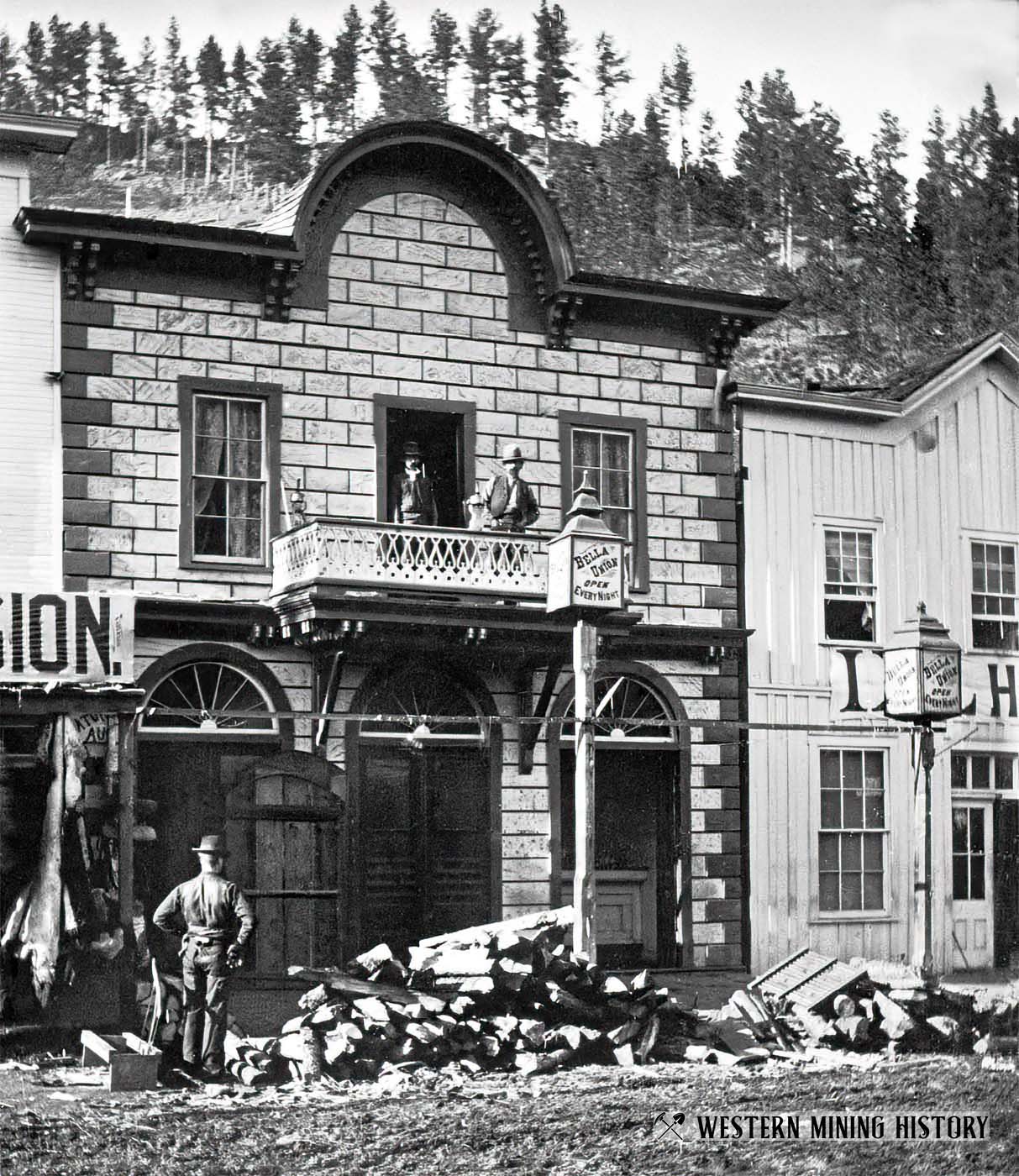
Deadwood’s first Sheriff was Seth Bullock, appointed by the Dakota Territory’s governor in 1877. Federal authorities overruled the appointment and ordered an election; Bullock lost to John Manning. Bullock and a business partner had opened the Star and Bullock Hardware in the town in 1876.
A visitor to Deadwood in April 1877 wrote that the town was crowded and unpleasant, with “not less than 10,000 in and around town; every hotel and boarding house is full to overflowing and every room and cabin is crowded so there is no room for more.”
The main road through the town twisted and turned through the gulch and at some places was “wide enough to be respectable” while at others it was barely enough for a team and wagon. The visitor described decaying carcasses of dead mules, horses, and oxen within the town; several residents were ill with smallpox.
Wild Bill Hickock Meets His End
One of Deadwood’s claims to fame centers on the death of James Butler “Wild Bill” Hickok, the former Union scout and notorious sharpshooter. Hickok came to town in June 1876 in a large wagon train from Cheyenne, Wyoming, and spent much of his time gambling.
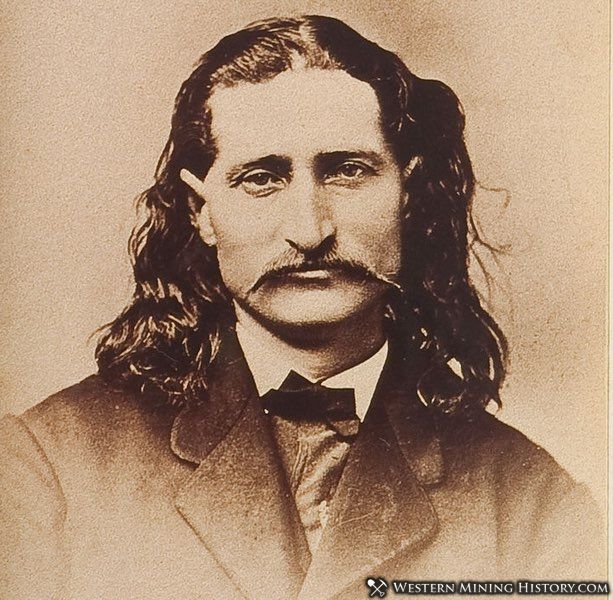
On August 2nd, 1876, Hickok was playing cards in Nutall and Mann’s Saloon Number 10. A man named Jack McCall approached the table from behind Hickok and shot him through the head at close range. Hickok died instantly, never seeing his assailant. He and McCall had reportedly been playing poker the day before and when McCall lost, he was short some of the money he owed Hickok. Hickok is said to have told McCall never to bet more than he owed, and left the matter at that.
McCall was initially acquitted of the crime at an informal trial in Deadwood by lying that he was merely avenging the death of his brother in Kansas at the hands of Hickok. McCall left Deadwood but was later tried and convicted of murder. McCall was hanged in Yankton in 1877 at the first legal execution in the Dakota Territory.
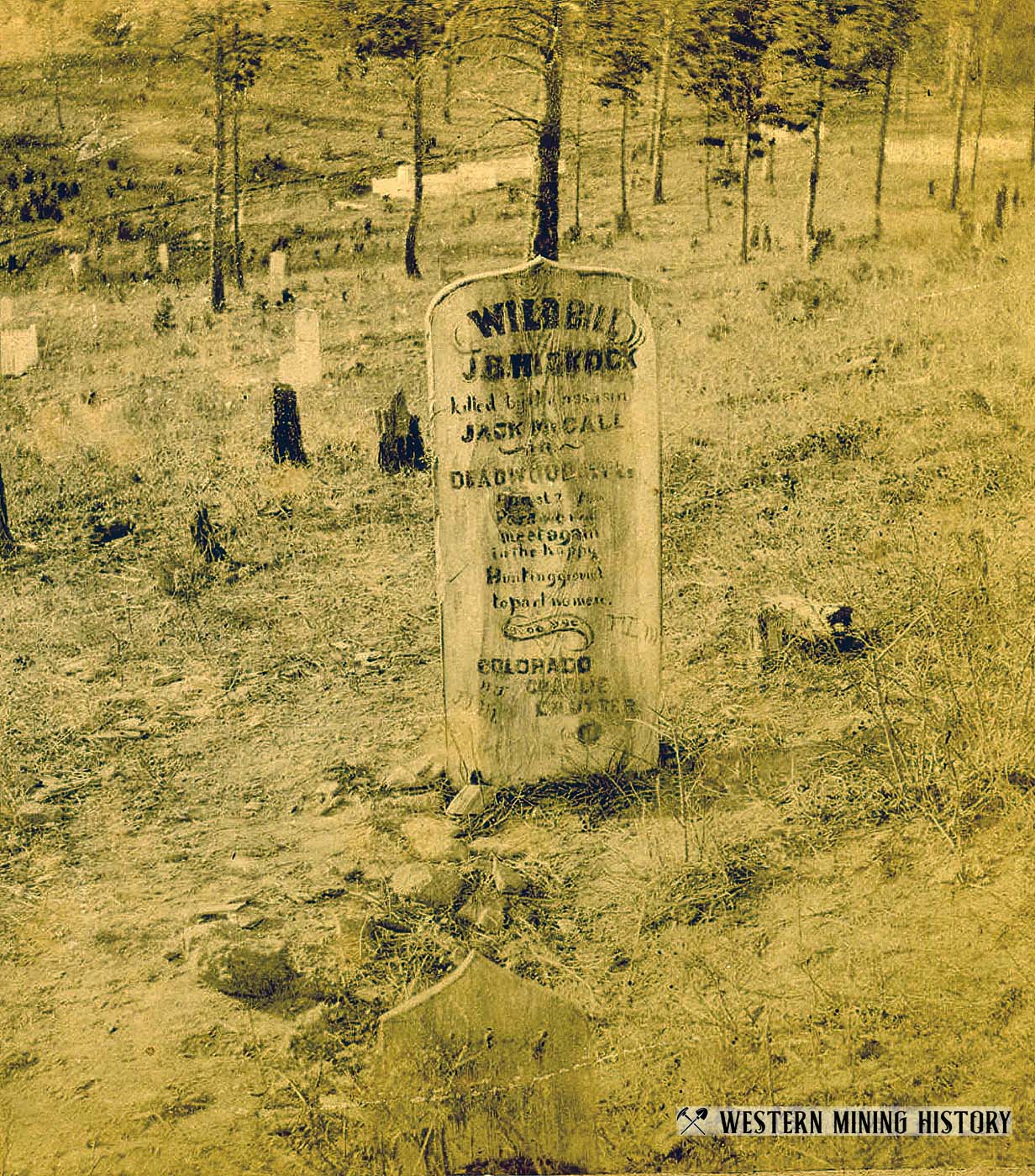
Newspapers of the era called the late Hickok a “quiet and unassuming man, peaceable and harmless, except when menaced by the cold glitter of the bowie knife or the deadly muzzle of the revolver.” If “not a paragon of excellence”, he was deemed “at least a man of brave impulses.” Hickok was never without his “two handsome ivory-handled revolvers of the large size.”
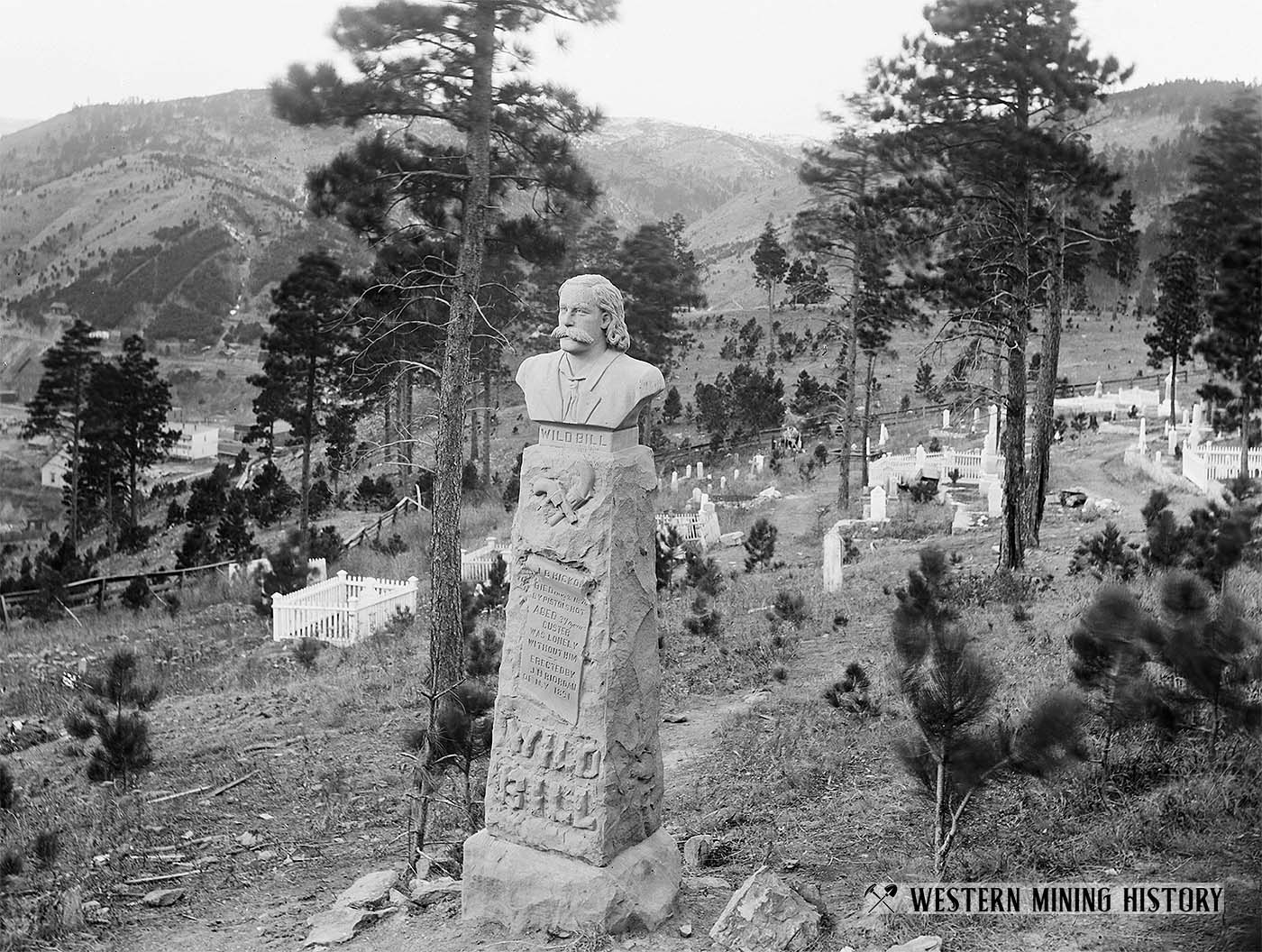
Hickok was buried twice in Deadwood - the first was in the southern part of town later called Ingleside, where the tale of his murder was inscribed into a wooden board. His coffin was moved in 1879 to Mt. Moriah Cemetery on a hilltop; a monument featuring his bust atop an obelisk was added in 1891.
Fires and Rebirth of the Town
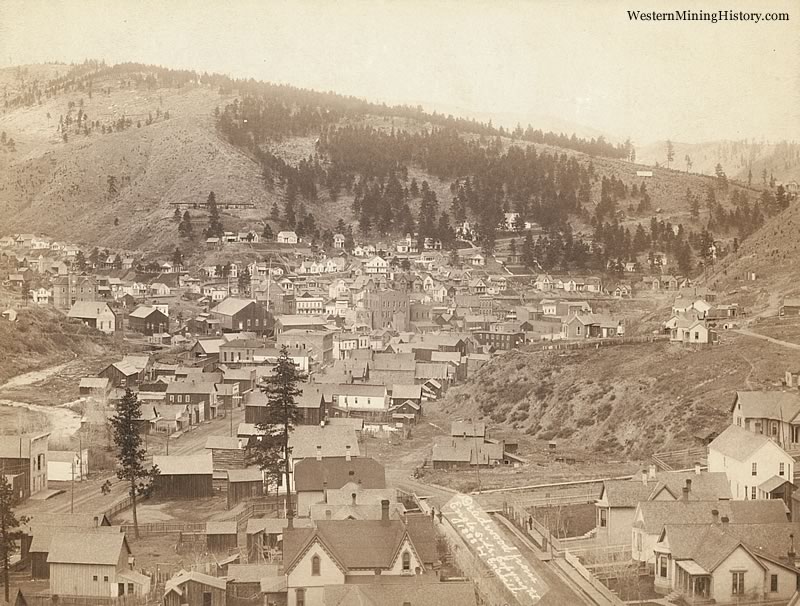
Telephone lines were first installed in Deadwood in 1878. Much of the town was destroyed by a fire in September 1879 that began in a bakery; 300 buildings were lost. That event prompted a wave of new construction with more fire-resistant materials like stone and brick, rebuilding the town within six months.
The town’s population dropped since many of the newly homeless didn’t rebuild their homes. Fewer than 4,000 residents were left in 1880, with only 29 percent listing their occupation as miner on the federal census. Electricity reached Deadwood late in 1883, following a spring of damaging floods brought on by melting snow coupled with heavy rains.
A narrow-gauge railroad, the Deadwood Central Railway, was built to connect Deadwood to the nearby mines clustered around the town of Lead in 1888. The Great Homestake Mine near Lead became one of the largest gold mining operations in the nation, and the population of Lead topped that of Deadwood by 1885.
The growing scarcity of profitable surface mining locales led to efforts at opening hard-rock mines; the source of the gold in the streambeds should be found in veins of quartz. Heavy milling equipment was needed for hard-rock mining, unlike the simple shovel and pan of placer mining. Stamp mills were built to crush the mined ore; mercury could then be used to draw out the gold. The Deadwood Reduction Works was built on the outskirts of Deadwood in 1888.
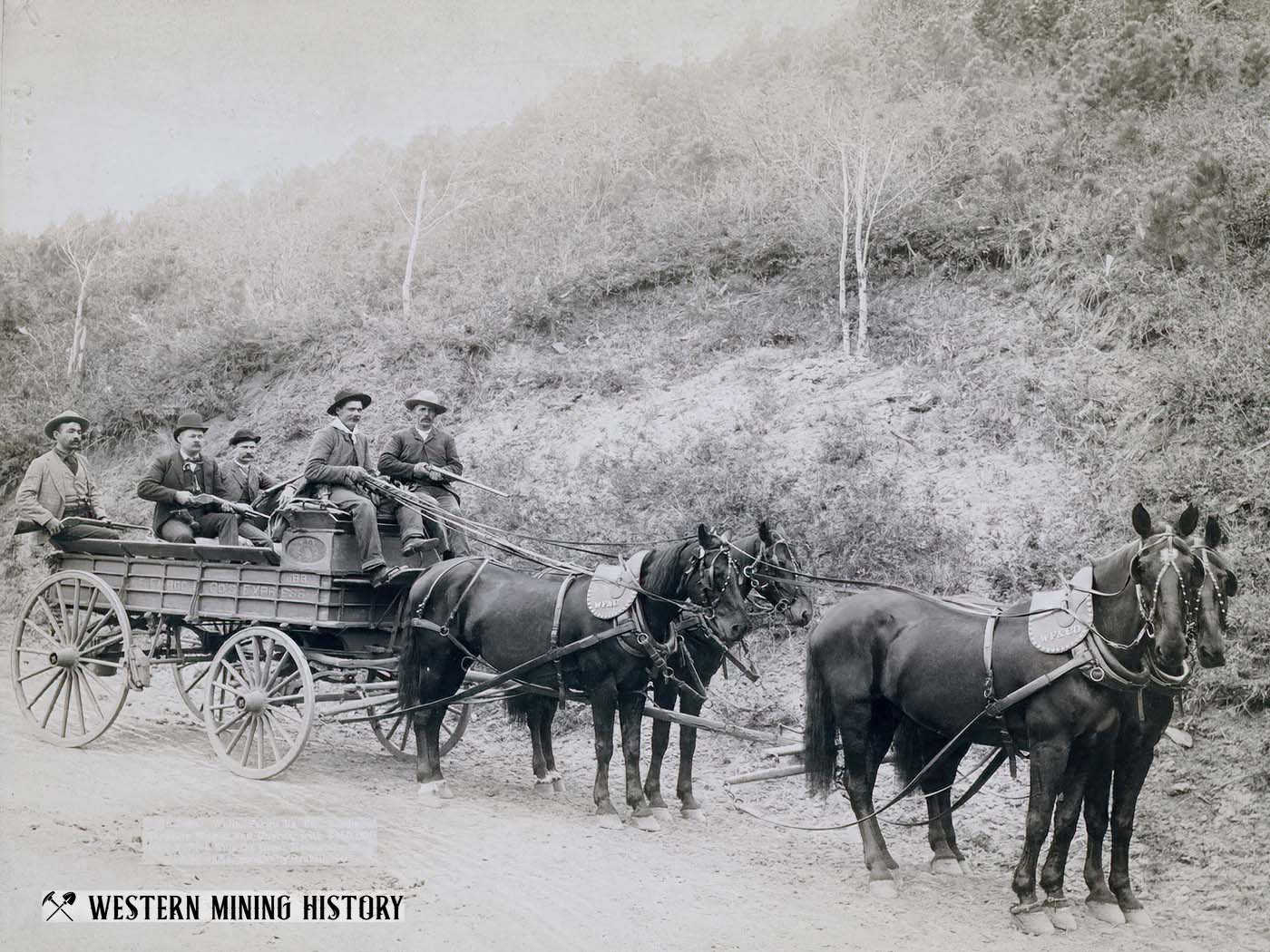
Lead and copper were necessary ingredients in a type of smelting being used elsewhere in the West for separating gold and silver from mined ores, producing bullion needing further refining and waste material as slag. Neither ingredient was plentiful near Deadwood, however.
By the late 1880s, smelting using iron pyrite was being tested as an alternative in a process called pyritic smelting. A small-scale plant named the Deadwood and Delaware Smelter (D & D) was built in Deadwood to try out the experimental method in 1889. Fuel for the furnace was coke or coal and was imported by train from West Virginia or Wyoming. Ore, iron pyrite, and limestone for flux were hauled to the smelter by wagon; only the iron pyrite was from local Deadwood mines.
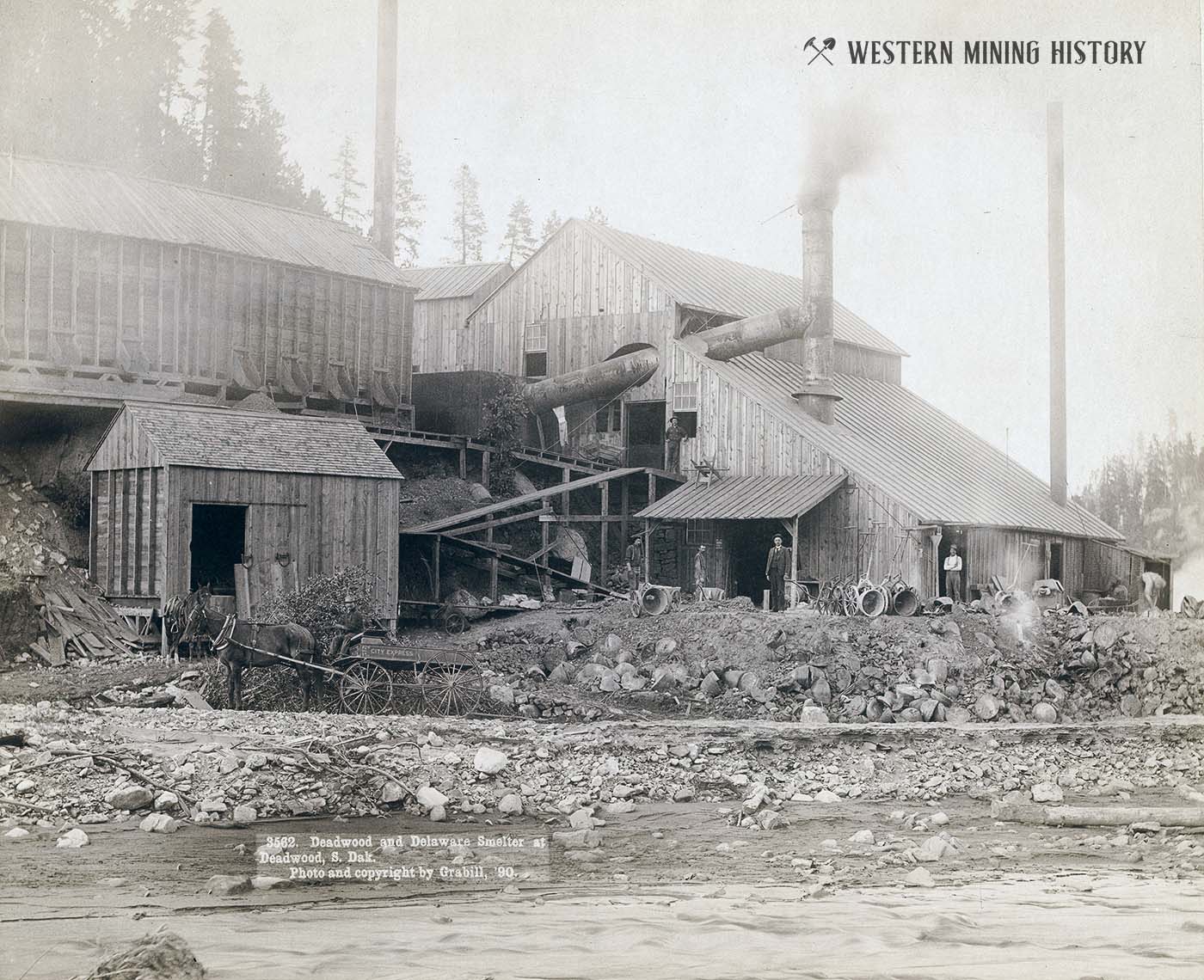
The D & D Smelter expanded into new buildings in 1890 and operated sporadically. The pyritic smelting process was soon overshadowed by a new, cheaper ore treatment method using cyanide, and two competing processing plants were built in Deadwood in 1894. The D & D Smelter started adding copper in 1895 for a more efficient extraction process. In 1899, D & D merged with one of the local competitors, the Golden Reward Smelter, but closed in 1904.
The Freemont, Elkhorn, and Missouri Railroad reached Deadwood in 1890, replacing stagecoach passenger travel. The potential success of the ore processing plants attracted the rail line to finally connect to Deadwood. The town became a central location with a freight depot, roundhouse, and engine house added in the south part of the town. By the turn of the twentieth century, a brick depot was built.
Another fire devastated the downtown area in 1894, possibly starting in a boarding house. After Seth Bullock’s hardware store was destroyed, he built a three-story hotel of sandstone in town. The 64-room hotel opened in 1896 and remains a local landmark. Bullock was later appointed U.S. Marshal for South Dakota by President Teddy Roosevelt. Some claim that Bullock’s ghost has been seen in his hotel building.
Calamity Jane
Martha Jane Cannary came to Deadwood in June 1876 in the same wagon train from Colorado and Wyoming as Wild Bill Hickok, “Colorado Charlie” Utter, Steve Utter, and “Kitty” Arnold. The frontierswoman and professional scout came to be known as “Calamity Jane” and was known for wearing men’s clothing.
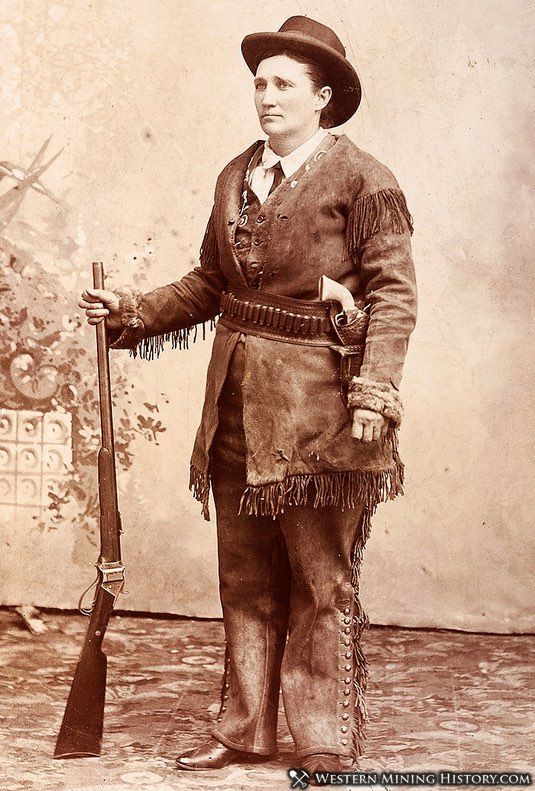
Calamity Jane left Deadwood after Wild Bill’s murder but returned in 1895 with a husband from Texas. Her husband, Clinton Burke, abandoned his wife and daughter in Deadwood after embezzling funds from locals. Calamity Jane died in a nearby town in 1903 and was buried at her request next to Wild Bill. Their graves continue to be a popular tourist attraction.
Tourists and Automobiles
A museum opened in town in 1901 to showcase the area’s golden mining legacy. The first automobile to travel the streets of Deadwood arrived in 1905 owned by a member of the Franklin family. Improved road networks in the 1910s began bringing more tourists by car to the Black Hills region as wagon roads became improved highways.
New state and national parks were established in the region. The carving of Mount Rushmore Monument–begun in 1927 and lasting for over a decade–spurred visitors to South Dakota from across the country. Tourist spending at local hotels and restaurants and providing services for workers in the remaining commercial mining operations nearby carried the town through the Great Depression.
The town’s population reached a twentieth-century peak in the 1940 census, with over 4,000 residents, although most census years through 1950 fluctuated between around 2,500 to 3,500 occupants.
Preserving the Historic Town
The railroad depot became City Hall in the 1950s after the railroad streamlined operations in favor of larger towns.
Sein’s Mine, a long-abandoned underground mine on the outskirts of town, was renovated as a tourist attraction in the 1950s. It hadn’t been a very successful gold mine, but had been profitable as a producer of iron pyrite for processing gold. The mine closed in 1904 and reopened briefly during World War I since iron and sulphur were ingredients in gunpowder. Renamed the Broken Boot Mine for an item found during the renovation, tours and gold panning experiences are still offered at the mine.
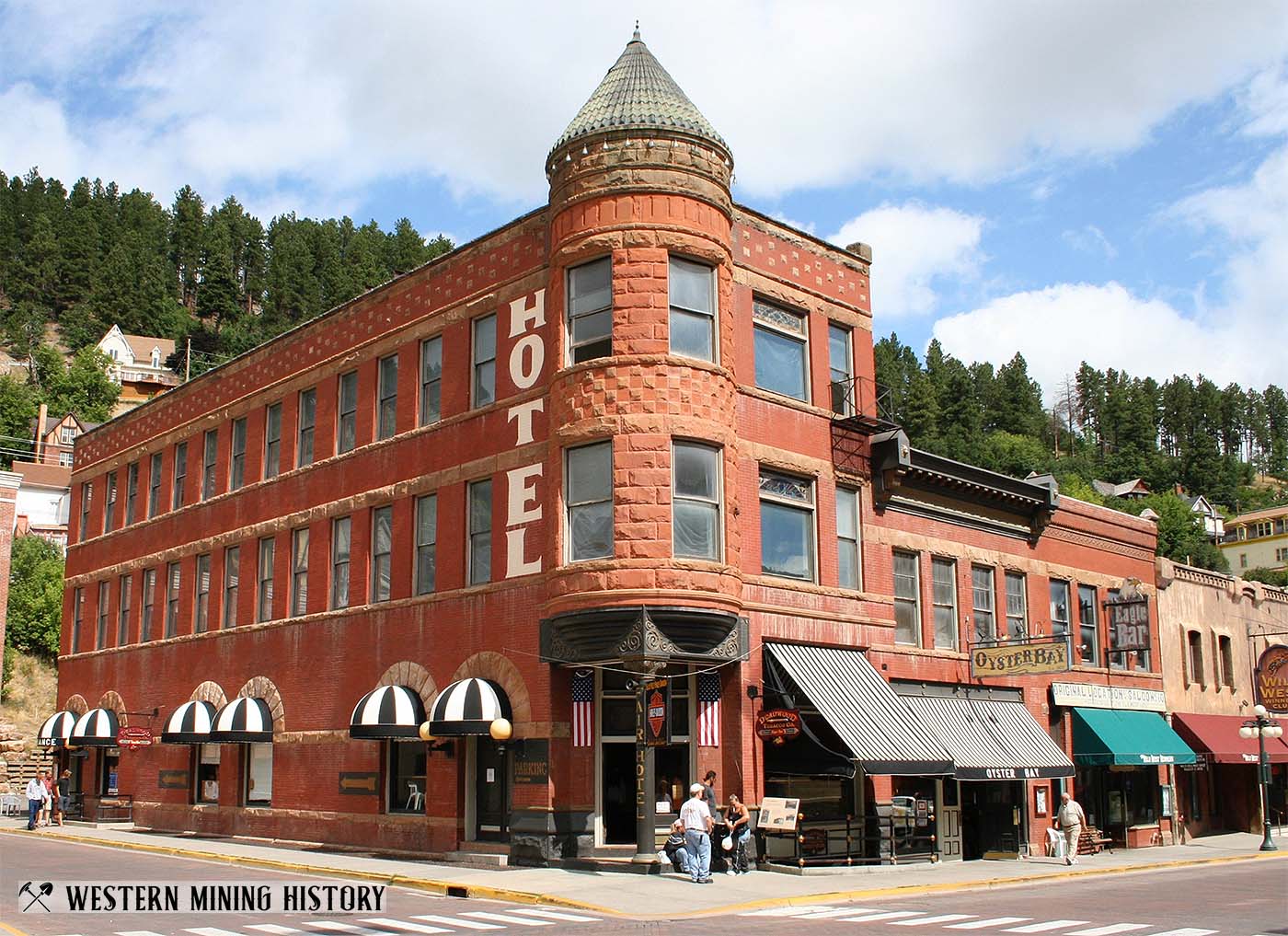
The town of Deadwood was listed in the National Register of Historic Places in 1961 as the Deadwood Historic District. Deadwood Historic District is considered a National Historic Landmark–one of less than a dozen in South Dakota. The town’s significance in the history of the American mining frontier was the cornerstone of the initial nomination.
In the late 1980s, the district was amended to include the architectural significance of the town’s surviving buildings through the 1930s and the part the town played in regional commerce, recreation, and transportation.
Betting on Deadwood
Deadwood’s population was been declining slowly since the 1950s and was nearly 1,300 in 2010. The last four brothels in town survived repeated attempts to shut them down until they were closed for good by federal and state authorities in 1980.
Legalized gaming came to town in the late 1980s, bringing an influx of new visitors and cash earmarked for historic revitalization of the town.
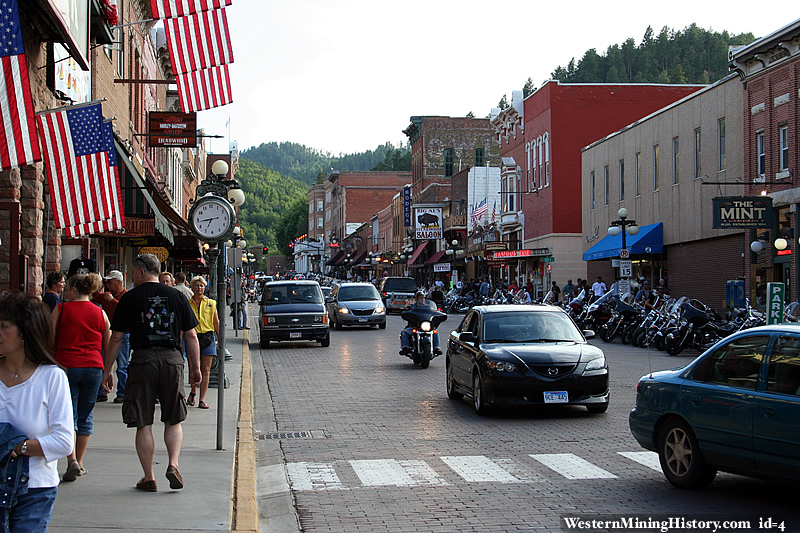
The well-known actor, Kevin Costner, opened a gaming hall and sports bar named the Midnight Sun in 1991 in the restored Phoenix Block Building in town. Fine dining on entrees like buffalo filets was offered in his restaurant, Kevin’s; movie memorabilia was displayed, including costumes from “Dances With Wolves.” With the spread of casinos across the country, the town became less of an attraction; Costner’s establishment closed in 2017.
Mining in the Black Hills
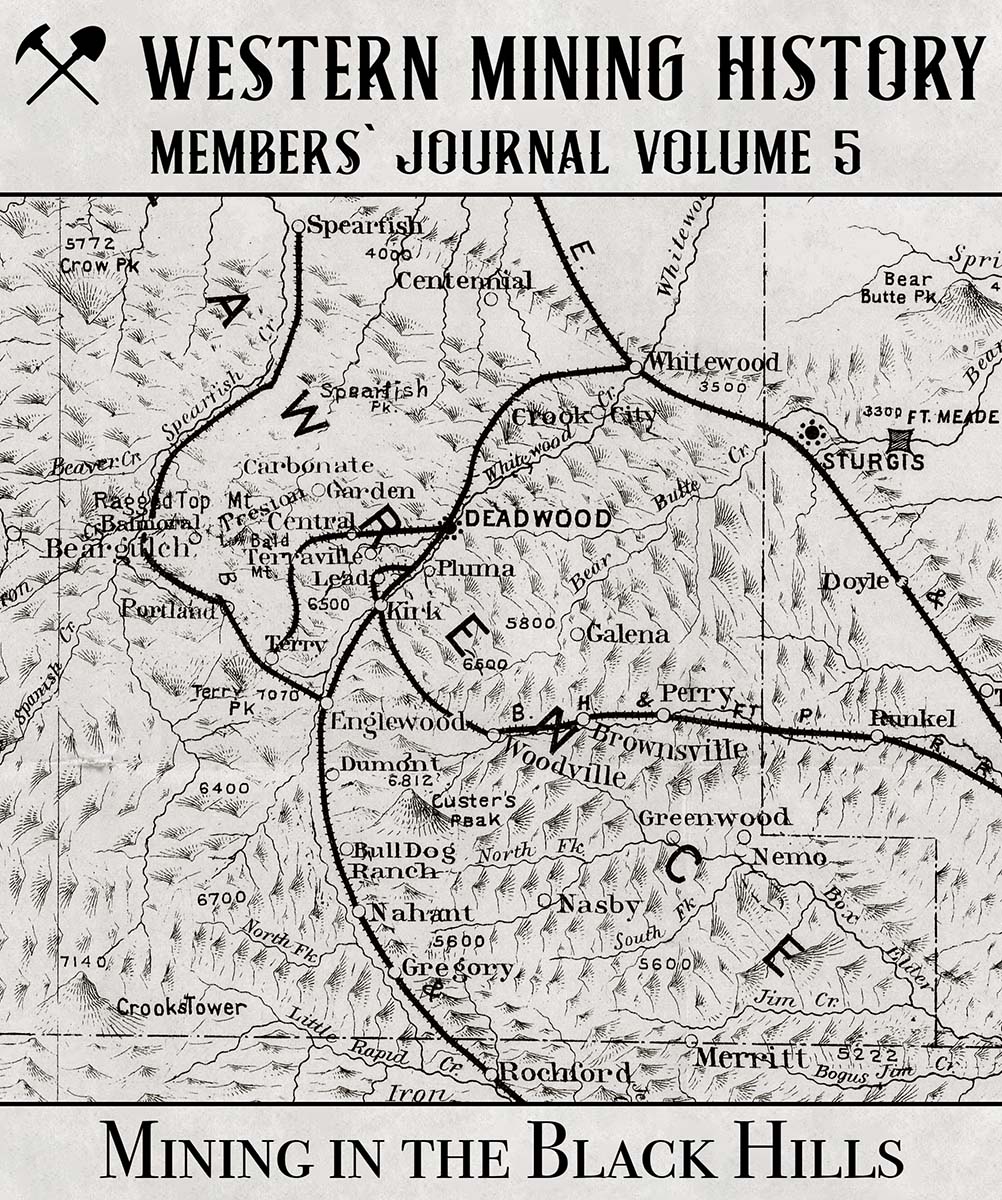
Western Mining History Member's Journal Volume 5: "Mining in the Black Hills", takes a closer look at the distribution of mining districts and towns the Black Hills of South Dakota.
Deadwood: The Ultimate Photo Collection
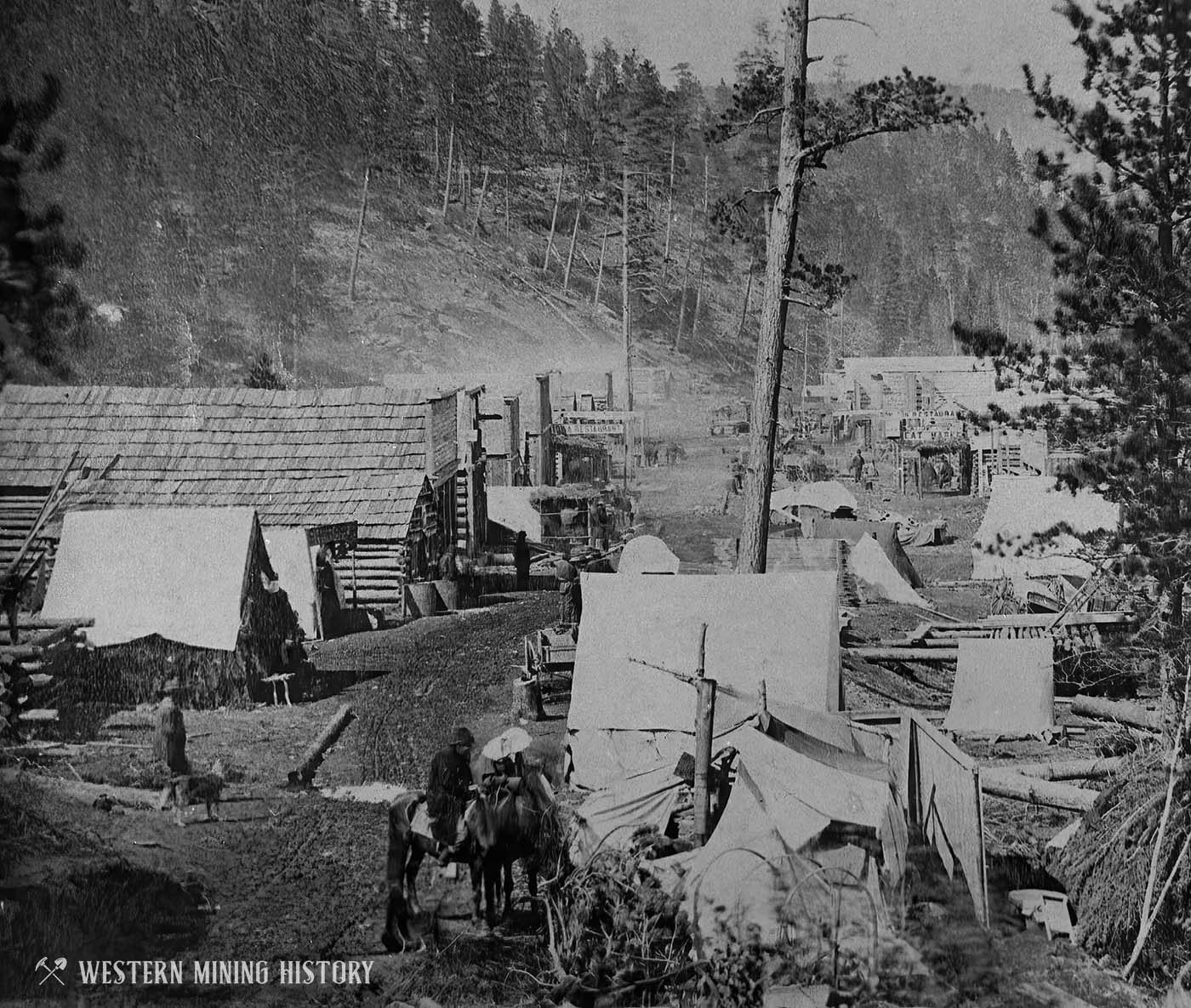
The Black Hills Gold Rush was one of the most significant historical events in the western United States. Deadwood: The Ultimate Photo Collection contains over 50 images capturing the early history of this famous gold region.
